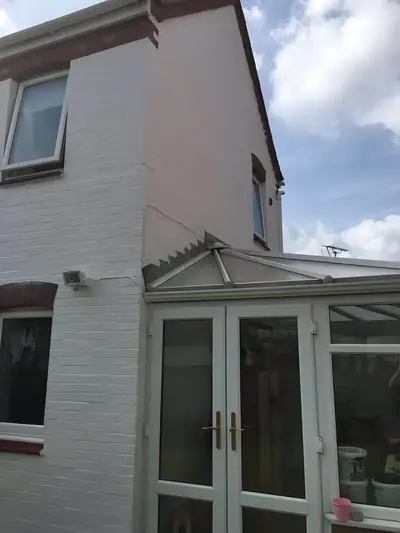
Exterior painting for 1970s to 1990s houses
Close to half of Cottenham's properties were built between 1965 and 1999, Council Tax records show. By now many have fascias, soffits and bargeboards that have been painted several times, with the paint lifting at the joints. We scrape back to a firm edge, prime the bare wood and fill open joints before the top coats. Soffit and fascia painting explains that part of the job.
Masonry gets an anti-fungal jet wash to remove algae and dirt, then cracks are filled and the walls painted in a coating chosen for brick or render.
House painting in the Cottenham conservation area
Cottenham's conservation area and its 65 Grade II buildings mean some homes need a more careful choice of colour.
On older walls, breathable mineral or limewash finishes may suit better than modern masonry paint, and our limewash and mineral paint page has more.
High Street listings, Article 4 and detached houses in Cottenham
Cottenham's numbered list entries cluster on one street: 34 of them have a High Street address, among them 32, High Street and 331, High Street. If you live on the High Street, it's worth checking whether your house is listed, and whether it's inside the Cottenham conservation area, before you choose an outside colour.
The council's general advice for homes in a conservation area is that “you may need planning permission for some works which would otherwise not need permission”. You may also come across Cottenham on its Article 4 register. That entry, Article/220, is for land off Beach Road, and the register describes it as restricting temporary use of land; painting isn't among the things it lists.
Away from the listings, the questions are practical. With 42.6% of homes detached, plenty of houses here have four elevations to paint, and a side wall close to a fence or the house next door is often where access takes the most planning.
Figures from 2021 Census (ONS); Met Office 1991-2020 climate averages; Historic England's National Heritage List; Historic England conservation areas. Source: Office for National Statistics licensed under the Open Government Licence v.3.0. Contains public sector information licensed under the Open Government Licence v3.0. © Crown Copyright 2026. Contains Ordnance Survey data © Crown copyright and database right 2026. Released under OGL. © Historic England and Local Planning Authorities 2026.
Cottenham at a glance
- 3 milesfrom our Landbeach base in a straight line, about 6 minutes by roadOSRM routing
- 94%are houses rather than flatsCensus 2021
- 43%of homes are detachedCensus 2021
- 15%of properties were built before 1919VOA Council Tax stock
- 1conservation areaHistoric England
- 5%were built 1945 to 1964VOA Council Tax stock
Sources: Census 2021 for Cottenham parish (ONS); Council Tax: stock of properties, 2026; Historic England conservation areas; road distance by OSRM.
Listed buildings and conservation areas in Cottenham
- Church of All SaintsGrade I listed
- 56, Denmark RoadGrade II listed
- 191 and 193, High StreetGrade II listed
- CottenhamConservation area
Sources: Historic England listed buildings; Historic England conservation areas.
Planning: check before you change colours
Before changing the outside colour of a listed house in Cottenham, or one inside the conservation area boundary, check with South Cambridgeshire District Council through Greater Cambridge Shared Planning. Its listed buildings page says listed building consent is required for any work that affects the character of the building, and its conservation areas page warns that some works there may need planning permission that wouldn't be needed elsewhere.
Cottenham Conservation Area boundary map (PDF) · Conservation areas, Greater Cambridge Shared Planning · Listed buildings, Greater Cambridge Shared Planning
How we approach exterior painting
For a Cottenham house on or near the High Street, Graham notes the existing colours of the walls, windows and doors at the survey, and whether the house is listed or inside the conservation area, before new colours are discussed. Walls are jet washed with an anti-fungal wash and left to dry, loose paint is scraped back, cracks are filled and bare timber primed. The finish coats then go on from the top down: masonry paint on brick or render, exterior gloss or satin on the woodwork. How we work, step by step, and the questions people usually ask are on our exterior painting page.
Best time of year for the work
Summer isn't reliably dry. At the Met Office's Cambridge NIAB station, about 3 miles south of Cottenham, June averages 49 mm of rain on the 1991-2020 figures, yet about one June in five gets less than 19 mm and another one in five more than 80 mm. We book outside painting from late spring to early autumn, leave spare days in the plan and pick the actual days from the forecast.