Period property decorating in Cambridge
Cambridge and its villages have a lot of older housing: Victorian terraces, Edwardian semis, cottages and listed buildings in the centre. We've decorated Victorian houses in Cambridge and Histon and worked in listed buildings, and these jobs need more thought than most. Graham visits first to see what the walls are made of, how the woodwork has been painted before and whether anything is protected.
Our main interior decorating page touches on older homes. This one goes further: what original plaster needs, why breathability matters, what to check before work starts in a listed building, and how old paint should be handled.
Original plaster, and what we did in Histon
Older houses were plastered in lime-based mixes, often over wooden laths on ceilings and partition walls. By now that plaster has usually been patched, papered over several times and painted with whatever was to hand. It can be soft, uneven, hollow in places and quick to crack.
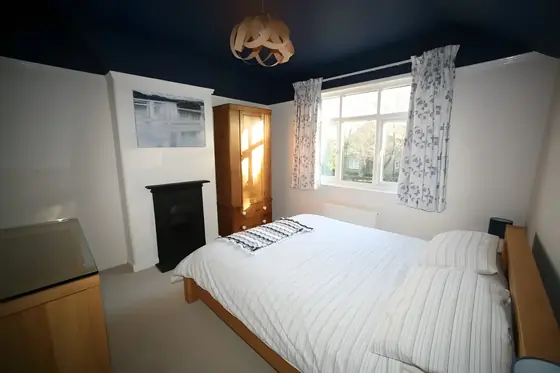
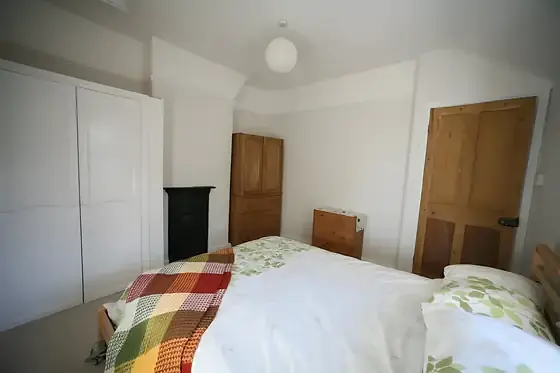
In a Victorian house in Histon we decorated two bedrooms on their original sand and stone plaster. Rather than replace it, the walls were stripped and lined with lining paper where they needed it, and the ceilings made good, before two coats of emulsion. The customers, L and J, wrote that "Andrew did a huge amount of work to prepare the surfaces."
Keeping sound original plaster is usually the better choice in an older house. Lining paper gives a rough wall an even face without disturbing what's underneath. Where lath and plaster has failed, our plasterers can skim it, as they did in a Cambridge bedroom where stripping the paper revealed tired old lath walls.
Lime, breathability and the right paint
Solid walls and lime plaster were built to let moisture pass through and dry out. Many modern vinyl and acrylic emulsions form a tighter film. On a sound, dry wall that's often fine, but on lime plaster or a wall that gets damp, trapped moisture can lead to blistering, flaking and damp patches.
Limewash and distemper are the traditional finishes for lime plaster and are often expected in listed and very old buildings. A customer who had us decorate their Grade II listed cottage wrote on Checkatrade: "Simon was a fantastic decorator and experienced in working with lime wash." Where something more practical is wanted, there are breathable modern paints: Little Greene Intelligent Matt Emulsion is breathable as well as washable.
Graham will suggest what suits each wall once he's seen it. If there's an active damp problem, that needs fixing at its source by the right trade before any decorating.
Decorating a listed building
Listed building consent covers work that affects a building's special character, inside as well as out. Like-for-like redecoration often doesn't need it, but changes such as stripping historic finishes, painting surfaces that were never painted, removing original plaster or changing an external colour may. We don't give legal advice, and it depends on the building, so check with your council's conservation officer before work is agreed. For Cambridge and South Cambridgeshire, that's Greater Cambridge Shared Planning.
Our listed work includes a studio flat in a listed building in central Cambridge, where years of nicotine staining were sealed with a stain block before repainting. Another customer, after exterior work on their listed building, wrote: "For heritage work they go the extra mile."
Old woodwork, sash windows and lead paint
Period joinery has usually had many coats over the years, and old paint on pre-1960s woodwork may contain lead. Intact lead paint is a low risk, but dust and fumes from sanding or burning it off are dangerous, especially to children and anyone pregnant. It should be tested before work starts. If lead is present it must not be sanded dry: wet abrading or dust-free sanding with extraction, careful sheeting and clean-up are needed, and overpainting sound old paint is sometimes the safer choice than stripping it.
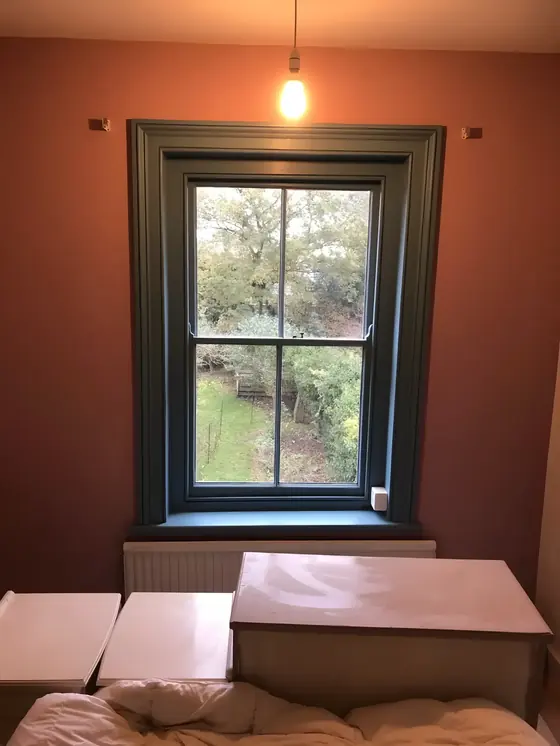
Original sash windows, panelled doors, shutters and picture rails are worth keeping. Sashes that need repair rather than just paint are covered by our sash window restoration service.
What affects the cost of decorating an older house
Older homes vary enormously, so the quotation is built from what Graham finds:
- The condition of the original plaster and how much needs lining or repair
- Layers of old paint or paper to remove, and any lead testing
- Traditional finishes such as limewash or distemper
- Picture rails, panelling, shutters and other detailed joinery
- High ceilings and stairwells that need proper access
- Any conservation officer requirements on materials or colours
When stripping reveals more work
Old walls hide things until the paper comes off. If we find more than anyone expected, we stop, show you and agree the cost before carrying on. A and J in Cambridge put it this way: "It's an older property and a number of the walls required more preparation than we realised, but the team kept us informed throughout, so there were no surprises."
Arranging a visit for a period home
Belinda will book a time for Graham to come round. If the building is listed, have any consent papers or conservation officer advice to hand, and tell us what you know about past work on the walls. The written quotation usually follows by email, and you don't pay until you're happy with the finished work.
We cover Cambridge and towns with plenty of older housing within reach of our Landbeach base, such as Saffron Walden and Ely.