New build decorating in Cambridge
New homes are usually handed over with every wall painted in a basic white or magnolia trade emulsion, chosen because it's quick and cheap to apply. It marks easily, doesn't wipe clean well and can look patchy where it was rolled on fast. Our decorators repaint new builds properly, and we also paint new plaster in older homes after a skim, an extension or a conversion. New build decorating is part of our interior decorating service, and Graham visits before quoting.
The same rules apply to any fresh plaster: let it dry, seal it with a mist coat, and only then put the colour on.
Painting new plaster: the mist coat
Fresh plaster is very absorbent. A normal coat of emulsion put straight on has its water sucked out, so it dries too fast, bonds poorly and can later peel or flake. A mist coat prevents that: a first coat of watered-down matt emulsion that soaks into the surface and gives the following coats something to grip.
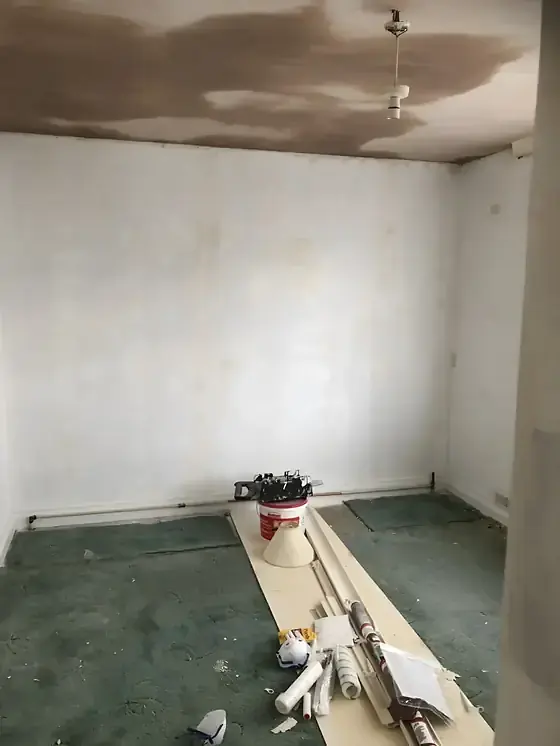
Before that, the plaster has to dry right through. It starts dark and turns an even pale pink as it dries, and any darker patches are still wet. A skim can take a few weeks to dry, longer in winter or in an unheated room. Paint manufacturers give their own guidance on the tin.
Mist coat painting should be done with a plain matt emulsion that the manufacturer says can be thinned, not a vinyl silk or a wipe-clean paint, which form a skin that stops the plaster breathing out its last moisture. Some brands make paints for new plaster that don't need thinning at all.
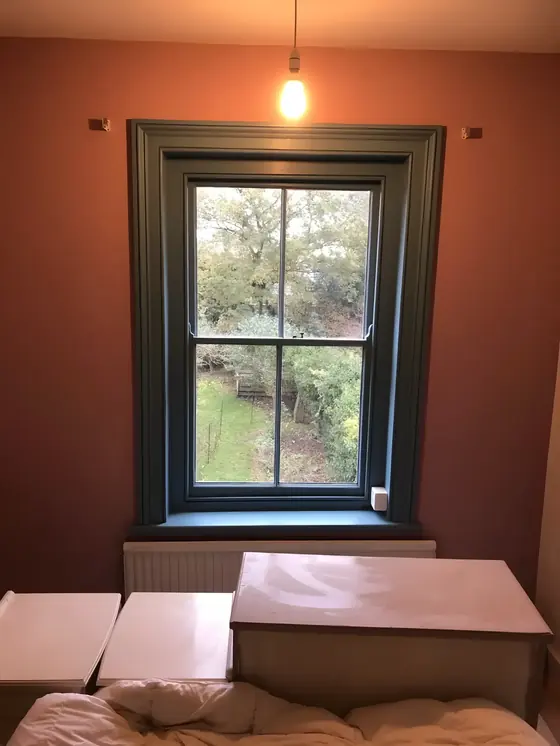
The mist coat also shows up any faults in the plastering. In a Cambridge bedroom we skimmed, the walls were sanded with our dustless sander and given a mist coat to show up imperfections before the Farrow & Ball Estate Emulsion finish coats went on.
Shrinkage cracks in the first year or so
New houses dry out. Timber in the roof and floors, plaster and blockwork all lose moisture over roughly the first year of central heating, and as they shrink, fine cracks appear: along ceiling joins, where walls meet ceilings, above doors and round window reveals. They're common and usually cosmetic, though a crack that's wide, keeps growing or runs diagonally through masonry is worth reporting to the builder.
That's why many owners live with the builder's paint for a while before redecorating. Check what your builder's aftercare or warranty covers too, as some housebuilders will fill shrinkage cracks themselves within a set period. When we decorate, cracks are raked out and filled, junctions are run with decorators' caulk so they can flex, and everything is sanded and spot-primed before painting.
Snagging marks and builder's finishes
Even a well-built home comes with snagging marks: scuffs from deliveries, roller marks, paint on sockets and glass, sanded patches left bare, nail pops in plasterboard and gaps where skirting meets the wall. Defects in workmanship belong to the builder, so report them through their snagging process first.
Site decorators work to a tight programme, which usually leaves little room for the finishing a full repaint adds: caulking every gap, filling and spot-priming each nail pop, sanding between coats and cutting in sharply at the ceiling line. MDF skirtings and door linings get a proper undercoat and a durable satin or eggshell top coat in place of the thin finish they often arrive with.
Decorating after the builders have gone
The same approach suits any project where builders have just finished: an extension, a loft conversion, a knock-through or a full renovation. It helps to know when the plastering was done, so the decorating isn't booked before the walls have dried. If new skim is needed, our own plasterers can do it, and our ceiling skimming page covers that side.
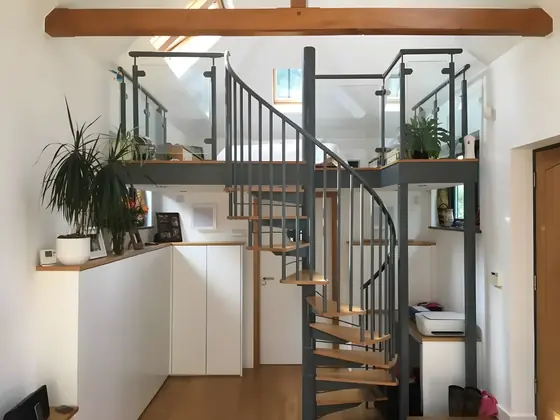
In Fulbourn, our client converted the old telephone exchange into a home and asked us to complete the interior decorating. White walls keep the small space light, Dulux Night Jewels 2 picks out the trim, and the kitchen worktops and beams were oiled with Osmo. The Old Telephone Exchange case study has the photos.
What new build decorating costs depend on
A new house is usually in sound condition, so the price comes down mostly to scale and finish:
- The number of rooms, and whether ceilings and woodwork are included
- How many shrinkage cracks and nail pops need filling
- New plaster needing a mist coat as well as finish coats
- Moving from builder's white or magnolia, especially to deep colours
- MDF woodwork needing an undercoat as well as top coats
- Stairwells and tall landings that need access equipment
- Whether the furniture is already in
Booking decorating for a new home
If you've just got the keys, or the builders are about to leave, call or WhatsApp us. Belinda will arrange for Graham to come and look at the plaster and any cracks. He prices room by room in a written quotation, usually by email, so you can do the whole house at once or start with the rooms that matter most.
We cover new developments around the city, including Cambourne and Northstowe, as well as Cambridge itself. When we've finished we go round the house with you, and you don't pay until you're happy with the finished work.