Painting over water stains and nicotine without them coming back
We paint over water and nicotine stains in Cambridge homes and rental flats, and the part that matters is what happens before the colour goes on. Our decorators clean the surface, seal every mark with a Zinsser stain block, and only then apply the emulsion. Done in that order, a brown water stain on a ceiling or years of yellowing on a living room wall stays covered.
Graham looks at the stains on his visit, works out what caused them and whether that cause has stopped, and writes the stain-blocking into your quotation as a separate step so you can see what it involves.
Why a stain shows through fresh emulsion
Most household stains are partly soluble in water. Emulsion is water-based, so when it goes on wet it softens the old deposit and draws it up into the new film. As the paint dries, the mark reappears as a yellow or brown shadow, sometimes within hours. A third or fourth coat of emulsion usually gives the same result.
Nicotine adds a second problem. It leaves a slightly sticky, greasy film that paint struggles to grip, so an unprepared wall can peel or crack as well as discolour. A stain block works by putting a sealed layer between the stain and the finish, and for heavy nicotine or water marks decorators usually choose a solvent-based or shellac-based product rather than another water-based one.
Each kind of stain needs its own preparation
Nicotine-stained walls and ceilings
We wash down first with sugar soap to lift as much of the tar as we can, rinse, and let the surface dry. Ceilings are usually the worst, because smoke rises. After washing, the whole surface is sealed, including areas that look clean, because nicotine is rarely as even as it looks.
Water stains on ceilings
A water stain on a ceiling is often a brown ring with a darker edge where the water stopped spreading. Once the leak is fixed and the plaster is dry and firm, we seal the mark and paint the whole ceiling, as a patch of new white rarely matches old white. If the ceiling is soft, bowed or cracked, it needs repair before any paint, and that is a different job, covered on our insurance and water damage page.
Smoke and soot
Candles, wood burners, open fires and cooking leave a grey film, often heaviest above radiators and around light fittings. It is cleaned off first, as paint over loose soot won't stay put. Some stain blocks also help seal in smells. Heavy smoke damage after a house fire is a job for specialist cleaners before any decorator.
Tannin and knots in timber
Knots in pine and the natural tannins in timbers such as oak and cedar can bleed through white or pale paint as orange or brown marks. Knots are sealed with knotting solution or a stain-blocking primer before undercoat. On pre-1960s woodwork the old paint may contain lead, so it should be tested first and never sanded dry.
How we stain-block a room, step by step
- Find the cause and check it has stopped: no active leak, no ongoing smoking in the room during the work
- Protect floors and furniture with dust sheets
- Wash down with sugar soap and rinse, especially on nicotine
- Scrape and fill any flaking or cracked areas
- Seal the stains, or the whole surface, with a Zinsser stain block
- Let it dry fully, as the manufacturer specifies
- Apply two coats of your chosen emulsion or eggshell
A listed studio flat after years of nicotine
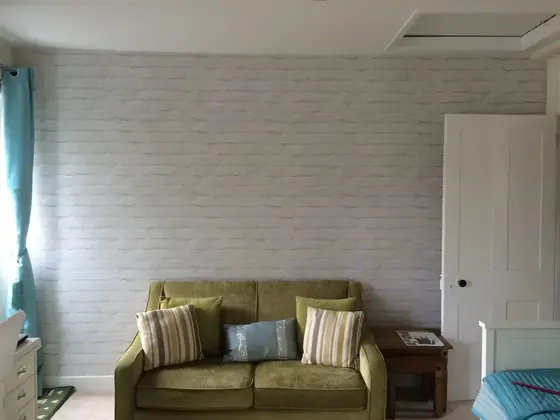
In a listed studio flat in central Cambridge, the walls throughout had heavy nicotine build-up. We stain-blocked them first, then painted in a light colour chosen with the client to open up the small space, and our wallpaper specialist Simon added a brick-effect feature wall. Our client Lucy wrote: "Graham talked me through everything and gave great advice regarding stain blocking and using the right colours to make the most of the small space I have."
On a whole-house renovation, our decorators stripped nicotine-stained wallpaper and stain-blocked the walls before hanging new coving and painting in Little Greene. A Checkatrade customer in CB4 described another job: "This job involved covering water stains, removing old painted wallpaper and dealing with significant surface imperfections as well as painting ceilings, walls and woodwork."
When a stain block isn't enough
Stain blocking hides a mark. It doesn't fix what caused it. If a ceiling stain keeps growing, the leak is still active, and painting it now only hides the warning. Damp walls with a tide mark near the floor, salts coming through the plaster, or black mould in a cold corner all point to moisture problems that need the right trade first.
Where the plaster has blown or crumbled, our plasterers can repair or skim the ceiling before we seal and paint. In a period house with old, soft plaster, lining paper over a sealed surface can also help, as we explain on our period property decorating page.
What sets the price of a stain-blocking job
Your written quotation sets out the cost. The things that change it are:
- How much of the room is stained, and whether the whole surface needs sealing
- How heavy the nicotine or soot is, and how much washing it takes
- Ceiling height and access over stairs
- Repairs to cracks or loose plaster before sealing
- Moving from a dark stained colour to a pale finish, which may need an extra coat
Getting the stains looked at
Send us a photo on WhatsApp if you like, but Graham will still want to see the room, because the cause of a stain decides the method. After his visit you get a written quotation, usually by email. We seal, paint and tidy up each day, and you don't pay until you're happy with the finished room. For the wider picture of how we decorate, see our interior decorating page.