
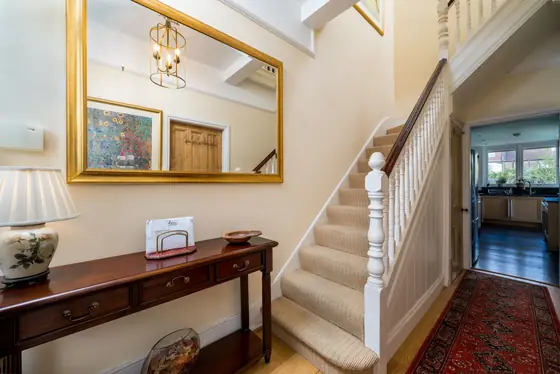
Period joinery in older houses
Victorian woodwork has usually been painted many times. Before the new finish goes on, we sand back runs and drips, fill dents and open joints and make sure the old gloss is keyed. Mirka dust-free sanders keep the dust out of the rest of the house, which matters where older layers may contain lead.
If your home is listed, check with West Suffolk Council before stripping or replacing original joinery. Repainting is generally the simpler route.
Stained staircases and doors
Valter and Denes once stained the staircase and doors in Mrs M Turner's Fordham home, and the staining was the part she praised most. Stairs need every tread, spindle and handrail sanded evenly so the colour takes the same way throughout, and a clear coat over the treads and handrail protects it.
In the town's rented flats and terraces, satin or eggshell on doors and skirtings is often the practical choice, as it shows fewer marks than gloss and wipes clean. More customer comments are on our reviews page.
Newmarket at a glance
- 15 milesby road from our Landbeach base, about 21 minutesOSRM routing
- 20%of properties were built before 1919VOA Council Tax stock
- 4%date from 1919 to 1939VOA Council Tax stock
- 72%are houses rather than flatsCensus 2021
- 109listed buildingsHistoric England
- 48%of homes are owner-occupiedCensus 2021
How we approach woodwork staining & varnishing
We'd clean greasy door edges, key old gloss and fill gaps where skirtings meet the wall. Bare pine is sealed with Zinsser so knots don't bleed. For stained stairs, we test the colour under a tread, then stain, varnish and agree a route so you can still get up and down. Finishes include Tikkurila satin and Farrow & Ball eggshell. The full method, products and FAQs are on our woodwork staining & varnishing page.