
Victorian walls and lining paper
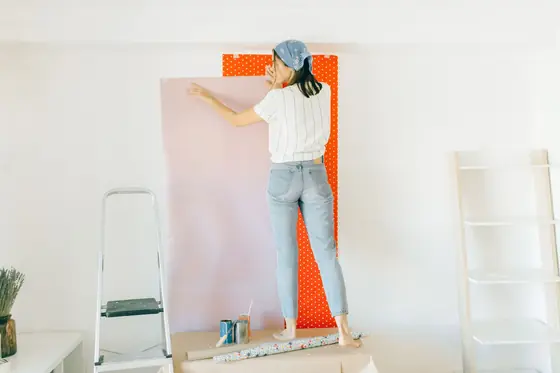
Most of the older stock here is from before 1900, about 1,480 properties. Those walls have often been patched, painted and papered several times over. We strip back, wash off old paste and fill, then hang lining paper so the finish paper has an even surface and its joins don't open as it dries.
If stripping reveals loose or blown plaster, our own plasterers can skim it before we hang anything, so the job doesn't stall waiting for another trade.
Heritage papers in listed and period homes
Historic England lists 109 buildings in Newmarket. A period house often suits a heritage design, such as the William Morris paper Simon hung through three floors of a Cambridge staircase, described in our hall, stairs and landing case study. Expensive papers leave little room for waste, so we check batch numbers and set out the pattern before cutting.
In the town's purpose-built flats, about 23% of homes, walls are usually flatter and a single feature wall is often the best use of a good paper.
Newmarket at a glance
- 15 milesby road from our Landbeach base, about 21 minutesOSRM routing
- 20%of properties were built before 1919VOA Council Tax stock
- 4%date from 1919 to 1939VOA Council Tax stock
- 8,178householdsCensus 2021
- 109listed buildingsHistoric England
- 48%of homes are owner-occupiedCensus 2021
How we approach wallpapering
We'd survey the walls, look for damp patches and loose plaster, and agree the order of work. Old paper is stripped, the walls washed and filled, then cross-lined where they're uneven. Finish paper is hung from a plumb line, with the pattern centred on the chimney breast or main wall and joins kept away from the window light. The full method, products and FAQs are on our wallpapering page.