
Woodwork staining and painting in older Chatteris houses
Most of that joinery has been painted many times, with runs, drips and opened joints to show for it. We sand back, fill and finish in gloss, satin or eggshell, and prime bare pine with Zinsser so knots don't bleed. In two Victorian bedrooms in Histon, the picture rails, cupboard doors and skirtings were made good, primed and finished in white; the Histon case study shows them.
The Grade I Church of St Peter and St Paul heads a list of 111 listed buildings in Chatteris. If your home is listed, ask Fenland District Council before stripping original finishes.
Staircases, doors and natural timber
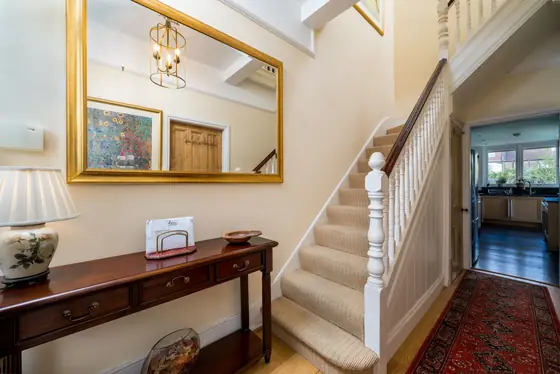
Staining a staircase means sanding treads, handrails and spindles evenly so the colour takes without blotches, then a clear protective coat where it wears. Mrs M Turner in Fordham wrote to thank Valter and Denes for the staining on her staircase and doors.
Beams and timber worktops can be oiled with Osmo, which soaks into the grain and is easy to top up. See staining and varnishing.
Chatteris at a glance
- 21 milesby road from our Landbeach base, about 29 minutesOSRM routing
- 14%of properties were built before 1919VOA Council Tax stock
- 6%date from 1919 to 1939VOA Council Tax stock
- 92%are houses rather than flatsCensus 2021
- 111listed buildingsHistoric England
- 68%of homes are owner-occupiedCensus 2021
How we approach woodwork staining & varnishing
We try the stain on a hidden spot, such as the back of a door, before committing. Leftover varnish or filler would take the colour differently, so the timber is sanded evenly all over. Painted joinery is cleaned, keyed, filled and caulked where it meets the wall, with a light sanding between coats for a smooth finish. The full method, products and FAQs are on our woodwork staining & varnishing page.