
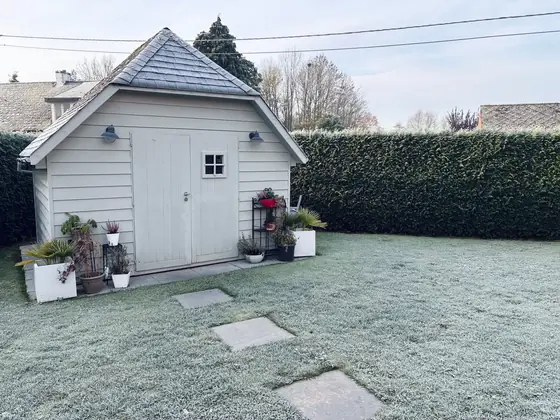
Shed and fence painting in Chatteris gardens
Detached houses alone number 1,764, and plots like those often have long fence lines and side gates. Posts and gravel boards at the bottom usually fail first, so they get proper attention. On sheds, the lowest boards and the door edges are where water gets in.
Before we start, moss, algae and dirt are cleaned off and loose fibres sanded down. Rotten boards or posts are flagged, and our carpenter or master builder can replace them before painting.
Paint, stain and the weather
Solid garden paint gives an even colour and makes a shed a feature, while stain shows the grain and is easy to recoat. Graham can paint small test patches so you can see a colour against the house and planting for a few days. Customer comments, including John Dunn's on his shed, are on our reviews page.
Garden timber needs dry wood and a few dry hours afterwards, so we book late spring to early autumn where we can. More on shed and fence painting.
Chatteris at a glance
- 21 milesby road from our Landbeach base, about 29 minutesOSRM routing
- 92%are houses rather than flatsCensus 2021
- 37%of homes are detachedCensus 2021
- 34%are semi-detachedCensus 2021
- 68%of homes are owner-occupiedCensus 2021
- 4,813householdsCensus 2021
How we approach shed, fence & gate painting
Flaking paint on sheds and gates is scraped and sanded, and green growth is cleaned off, gently on rough-sawn panels. Hinges and latches are masked or removed, with loose rust brushed off first. Every face of a gate is coated, top and bottom edges included, and long fence runs are brushed unless overspray can be controlled. The full method, products and FAQs are on our shed, fence & gate painting page.