Wallpaper removal in Cambridge, done before anything new goes up
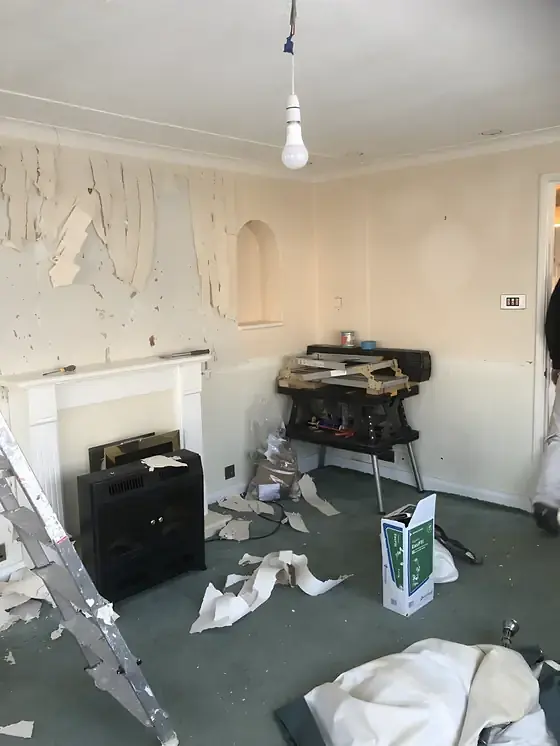
Yes, we do wallpaper removal on its own or as the first stage of redecorating a room. Our decorators strip the paper, wash the walls down and get them ready for paint or new paper. If the plaster underneath turns out to be loose or cracked, our plasterers repair or skim it, so you aren't left hunting for another trade halfway through.
A lot of wallpaper stripping in Cambridge is in older houses where several layers have built up over the years, often with paint on top. That's slow, careful work, and the way it's done decides how much making good the walls need afterwards.
How different papers come off
There's no single method. We look at what's on the wall and choose the gentlest way that works.
Modern strippable and vinyl papers
Many non-woven papers are designed to peel off dry in full lengths. Vinyls usually leave a paper backing behind once the top layer is pulled away, and that backing is then soaked and scraped off. If the backing is sound and firmly stuck, decorators sometimes hang new paper over it, but we prefer to remove it when the wall is going to be painted, because the backing can lift under wet emulsion.
Woodchip
Woodchip was often hung to hide poor plaster, so expect the wall behind it to need work. It's thick, it soaks up water slowly, and it has usually been painted more than once. We score it, steam it in sections and scrape it off with a broad stripping knife, taking care not to dig into soft plaster. One Checkatrade customer who bought a house with it listed "Stripping dated wood chip" among the jobs we did before redecorating inside and out.
Painted-over paper
Emulsion on top of wallpaper stops water getting through, which is why it seems to resist everything. Scoring the surface lets the steam in. It has to be done lightly, as a heavy hand with a scoring tool leaves hundreds of small marks in the plaster that then need filling. We had this on a Cambridge lounge, staircase and landing job where the customer's review describes "removing old painted wallpaper and dealing with significant surface imperfections" before the ceilings, walls and woodwork were painted.
Plasterboard, old lime plaster and the risk of damage
Plasterboard walls need the most restraint. If paper was hung straight onto unsealed board, too much steam or soaking softens the board's paper face and it tears away with the wallpaper. We keep the water to a minimum on board walls, and where the face does lift we seal it before filling, so it doesn't bubble when painted.
Older plaster, common in Victorian houses around Cambridge, can be soft and crumbly. Steaming it for too long loosens it further. We work a small area at a time and stop to check how the wall is behaving.
Occasionally stripping exposes a textured coating, such as Artex, under the paper. HSE guidance says textured coatings in buildings built or refurbished before 2000 may contain asbestos. In that case it should be sampled and tested before anyone sands, scrapes or drills it, and removing asbestos is a specialist job, not one for a decorator. If the test is clear, our Artex skimming service can cover it.
What's underneath: blown plaster, cracks and old repairs
Once the paper is off, you see the wall as it really is. Common findings are hairline cracks, old filler that has shrunk, holes from shelves, and areas of blown plaster that sound hollow when tapped because they have come away from the brick or laths behind.
Small defects are part of normal preparation: we fill, sand with our Mirka dust-free sanders and spot-prime. Blown or failing plaster is different. Paint or paper over it and it will crack again. In one Cambridge bedroom, stripping revealed tired lath-and-plaster walls. The affected walls were skimmed, then sanded with our dustless sander and given a mist coat to show up any imperfections before the room was painted in Farrow & Ball Skimming Stone with a Cinder Rose feature wall. The bedroom strip and skim case study has the photos.
Walls that are sound but uneven don't always need skimming. A good lining paper can even them out more cheaply, and Graham will tell you which approach the wall actually needs.
Washing off the old paste
This step gets skipped more than any other. Old wallpaper paste left on the wall reacts with new emulsion, and the paint can crack, craze or fail to dry evenly. After stripping we wash the walls down with warm water until the surface no longer feels slippery, then let them dry before filling and priming.
A customer's view of the making good
A customer in CB4 described what happened after the paper came off in their bedroom:
- "After removal of the old wallpaper the surfaces required a lot of work but Simon worked very hard to complete this to a very high standard." (Checkatrade customer, CB4)
What decides the cost of stripping wallpaper
We won't know the full picture until the paper is off, but the visit lets Graham judge most of it. The main factors are:
- How many layers there are, and whether they have been painted
- The type of paper: strippable, vinyl, woodchip or traditional
- The wall underneath: plasterboard, modern plaster or old lime and lath
- How much filling, lining or plastering the walls need afterwards
- Ceiling paper, high stairwells and rooms that are hard to clear
- Whether we are also redecorating the room after stripping
Booking your wallpaper stripping
Graham comes round, looks at the paper, tests a corner if it helps, and talks you through what he expects to find underneath. Your written quotation, usually sent by email, separates the stripping from any repairs or decorating. If something unexpected appears once the walls are bare, we stop, show you, and agree any extra before carrying on. When the work is finished you don't pay until you're happy with it.
We remove wallpaper across Cambridge and nearby villages such as Histon and Impington. If you'd like new paper hung once the walls are ready, our wallpaper hanging team can follow straight on.