
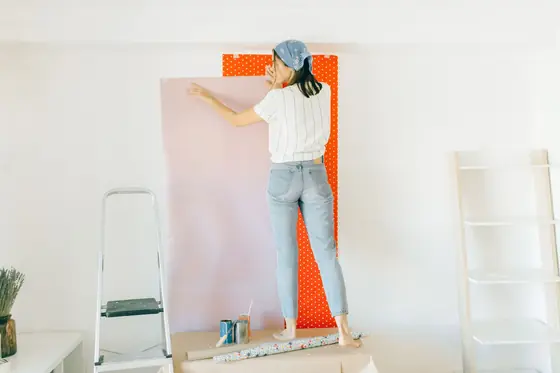
Papering 1960s and 1970s walls in Comberton
In houses from the 1960s and 1970s, the main obstacle is usually what earlier owners left behind: painted-over paper, woodchip, or vinyl with its backing still stuck to the wall. We strip it, wash off the old paste, then fill and size the wall so new paper slides into place and dries flat.
A feature wall is a popular way to start, often behind a bed or across one side of a living room. Simon, our wallpaper specialist, hangs designer and heritage papers, checking batch numbers and planning where the pattern falls before a roll is cut.
Older cottages and listed walls
Comberton has 42 listed buildings, among them Glebe Cottage at Grade II* and Woottens Farmhouse at Grade II. Walls in houses that old are rarely straight or even, so we hang lining paper first to give the finish paper a consistent base. We took the same approach on original sand and stone plaster in a Victorian house in Histon.
If your house is listed, it's worth checking with South Cambridgeshire District Council before historic wall finishes are removed.
Comberton at a glance
- 12 milesby road from our Landbeach base, about 18 minutesOSRM routing
- 8%of properties were built before 1919VOA Council Tax stock
- 7%date from 1919 to 1939VOA Council Tax stock
- 972householdsCensus 2021
- 42listed buildingsHistoric England
- 75%of homes are owner-occupiedCensus 2021
How we approach wallpapering
We start by testing how the old paper comes away and what the wall is like underneath. Post-war plaster is usually filled, sanded and sized, while cracked or patched areas get lining paper first. Pattern repeats are set out from the most visible wall, every drop is hung to a plumb line, and the paste follows the paper maker's instructions. The full method, products and FAQs are on our wallpapering page.