
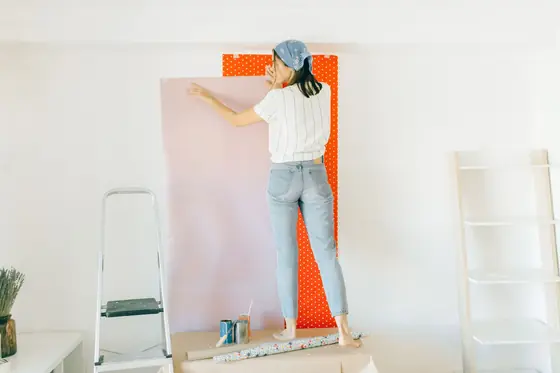
Papering older Huntingdon walls
In a home built before 1900, stripping the old paper can reveal patched or loose plaster. We fill and make good, and usually hang lining paper so the finish paper dries onto an even surface. If the plaster turns out to be in poor condition, our plasterers can skim it, and we agree any extra cost before carrying on.
Heritage and hand-printed papers leave little room for waste. We check batch numbers, plan where the pattern falls and find the least visible join before cutting anything.
Feature walls, stairwells and flats
More than half of Huntingdon's homes date from 1983 onwards, and their walls are usually sound enough to paper directly. A single feature wall behind a bed or across a living room adds pattern without committing a whole room to it.
Stairwells are harder. Simon, our wallpaper specialist, sets up safe access over the stairs and plumbs every drop, so the pattern stays straight from the hall to the landing. In a flat, we bring paste tables and materials through shared areas with care.
Huntingdon at a glance
- 20 milesby road from our Landbeach base, about 24 minutesOSRM routing
- 8%of properties were built before 1919VOA Council Tax stock
- 3%date from 1919 to 1939VOA Council Tax stock
- 10,519householdsCensus 2021
- 123listed buildingsHistoric England
- 56%of homes are owner-occupiedCensus 2021
How we approach wallpapering
We strip and wash down first, then fill cracks and fixing marks. Older Huntingdon walls usually get lining paper, while newer ones may only need sizing. Patterns are set out from the focal wall, and traditional papers are pasted on the table while non-woven ones are hung by pasting the wall instead. The full method, products and FAQs are on our wallpapering page.