
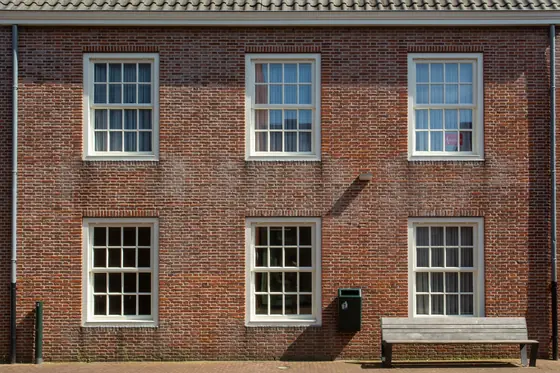
Period windows in the old town
The town grew as a coaching centre in the 18th and 19th centuries, and buildings such as Walden House and the Town Hall, both Grade II*, long predate modern frames. Where houses of that age keep their timber sashes, the paint is what protects the joints, sills and bottom rails.
If your home is listed or in the Huntingdon or Hartford conservation area, check with Huntingdonshire District Council before changing colour. White or soft off-white is the usual outside choice.
Our part, and the carpenter's
We do the decorative work: scraping back loose paint, sanding with dust-free sanders, filling open joints, priming bare timber and finishing in eggshell or satin. We move each sash up and down as we paint so it still slides, and run a fine line onto the glass to seal the putty.
Broken cords, rotten timber and sashes that need new sections are joinery. Our carpenter deals with them first, so you still deal with one company. Doors and other period joinery are covered under woodwork staining and varnishing.
Huntingdon at a glance
- 20 milesby road from our Landbeach base, about 24 minutesOSRM routing
- 8%of properties were built before 1919VOA Council Tax stock
- 123listed buildingsHistoric England
- 2conservation areaslocal council
- 28%are terracedCensus 2021
- 3%date from 1919 to 1939VOA Council Tax stock
How we approach sash window restoration
Graham lists each Huntingdon window separately, since the weather side usually needs more work and you may want to start there. Loose paint comes off to a sound edge, with Mirka extraction keeping old dust out of the room. Bare timber is primed, sills sealed carefully, and every coat sanded lightly. Windows are shut and fastened each evening. The full method, products and FAQs are on our sash window restoration page.