
Keeping a sound Huntingdon kitchen
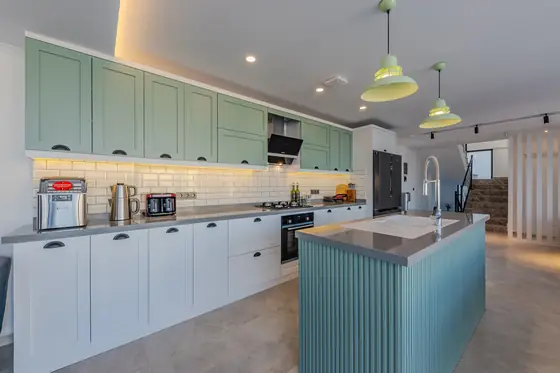
Around 29% of households in the town are paying off a mortgage, according to the 2021 Census. For many of them, a full replacement is a big outlay for units that still open, close and hold their shelves. Painting the doors, panels and plinths changes how the kitchen looks without ripping anything out.
Graham checks the doors at his visit. Solid timber, painted wood and MDF all take paint well when prepared, and if a door finish looks unlikely to hold paint, he'll say so then.
Preparation and the finish
Grease from cooking settles near the hob and around every handle, and paint won't bond to it. So we degrease every surface, sand with Mirka dust-free sanders, fill chips and prime with Zinsser before the top coats. Worktops, tiles and appliances are masked first.
On long runs of slab doors, our Graco Ultra cordless airless sprayer gives a smooth, even coat. In a smaller flat kitchen, a brush and roller can be quicker overall. Built-in wardrobes and alcove shelves can be done at the same time, along with any woodwork staining or varnishing.
Huntingdon at a glance
- 20 milesby road from our Landbeach base, about 24 minutesOSRM routing
- 56%of homes are owner-occupiedCensus 2021
- 29%of households own with a mortgageCensus 2021
- 30%were built 1983 to 1999VOA Council Tax stock
- 23%were built since 2000VOA Council Tax stock
- 82%are houses rather than flatsCensus 2021
How we approach kitchen cabinet painting
Doors are labelled and removed or masked in place, with handles and hinges taken off. After degreasing and dust-free sanding, a Zinsser primer goes on to suit the old finish, then a satin or eggshell woodwork paint from Tikkurila, Farrow & Ball or Dulux. We agree the order of work so your sink and fridge stay usable, and tidy every evening. The full method, products and FAQs are on our kitchen cabinet painting page.