
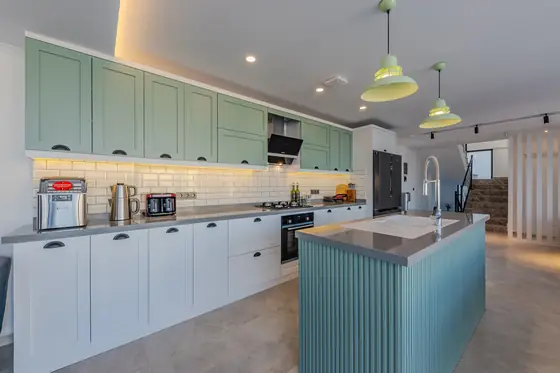
Fitted kitchens from the 1980s, 1990s and 2000s
That's about 950 homes, with the busiest single band being 1993 to 1999. Kitchens of that period often have oak-effect, light wood or cream doors. The carcasses are usually sound and the layout still works, and it's only the colour that dates the room.
With 681 households, or 44.6%, buying with a mortgage, a full new kitchen is a big extra cost for many families. Repainting keeps the worktops, plumbing and appliances where they are, and there's no wait for a fitter.
Kitchen cabinet painting starts with the right primer
Many doors from those years have a foil, vinyl or laminate face. Some take paint well once keyed and primed, while others are already peeling at the edges and won't hold a coating. Graham checks yours at his visit and tells you which you have.
Doors are degreased, sanded dust-free with Mirka sanders, primed with a Zinsser primer suited to the surface and finished in a hard-wearing satin or eggshell. On long runs of slab doors our Graco cordless sprayer gives a very even coat. More is on our kitchen cabinet painting page.
Papworth Everard at a glance
- 20 milesby road from our Landbeach base, about 25 minutesOSRM routing
- 62%of homes are owner-occupiedCensus 2021
- 45%of households own with a mortgageCensus 2021
- 34%were built 1983 to 1999VOA Council Tax stock
- 48%were built since 2000VOA Council Tax stock
- 90%are houses rather than flatsCensus 2021
How we approach kitchen cabinet painting
We label each door and drawer, remove hinges and handles, and degrease thoroughly, especially near the hob and bin. Laminate and foil faces get a primer suited to bonding with them, and chipped timber is filled before priming. Two top coats follow, sprayed or brushed, and we advise treating the doors gently for the first few weeks while the paint hardens. The full method, products and FAQs are on our kitchen cabinet painting page.