
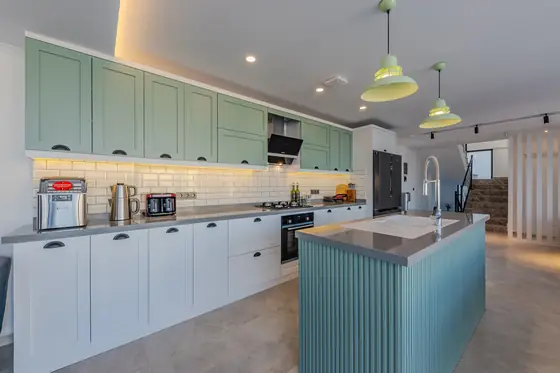
Keeping a sound St Ives kitchen
Two-thirds of St Ives households own their home, 29.9% with a mortgage. For many of them, repainting the doors and end panels is a smaller job than a new kitchen: nothing is ripped out, the worktops stay and the appliances stay connected.
Graham checks what the doors are made of at the visit. Painted timber, solid wood and MDF take paint well with the right primer, and if a finish is unlikely to hold he'll tell you before we start.
Finishes that cope with daily use
Cupboard doors need a hard woodwork paint, usually satin or eggshell from Tikkurila, Farrow & Ball or Dulux. Dark base units against pale walls are popular. Built-in wardrobes and alcove shelves can be done in the same visit, and our woodwork painting page covers doors and skirtings.
St Ives at a glance
- 18 milesby road from our Landbeach base, about 24 minutesOSRM routing
- 67%of homes are owner-occupiedCensus 2021
- 30%of households own with a mortgageCensus 2021
- 27%were built 1983 to 1999VOA Council Tax stock
- 13%were built since 2000VOA Council Tax stock
- 85%are houses rather than flatsCensus 2021
How we approach kitchen cabinet painting
Doors are taken off, numbered on a hidden edge, and their handles and hinges bagged. Every surface is degreased, especially by the cooker, then sanded with Mirka dust-free sanders and filled where chipped. A Zinsser primer goes on, followed by two durable coats. On long runs of slab doors we spray with our Graco Ultra handheld; on a smaller Shaker kitchen a brush often gives the nicer finish. The full method, products and FAQs are on our kitchen cabinet painting page.