
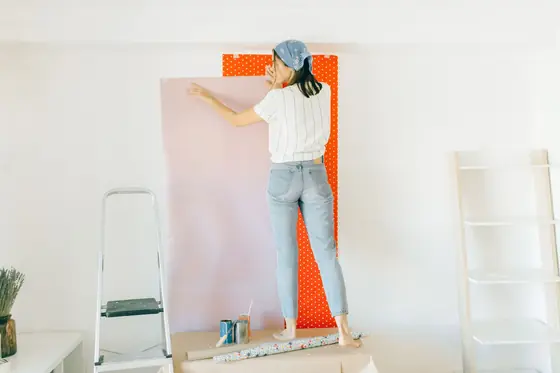
Papering walls that are centuries old
In an old timber-framed house a wall can lean, bow and change plane within a single drop. Simon, our wallpaper specialist, hangs every length from a plumb line rather than chasing the edge of the last one, and decides where the pattern can be allowed to drift least visibly, usually in a corner or behind a door.
Lining paper first helps on cracked or patched walls, and with roughly 430 homes in the town built before 1919, we hang a lot of it. If the plaster comes away during stripping, our plasterers can make it good before we go on.
Heritage designs and modern papers
With 63% of homes owner-occupied, many people are papering for the long term. Period houses often suit William Morris or similar heritage designs, like the three-storey William Morris hall and stairs we papered in Cambridge. In the newer estates, a single feature wall is the common request. If your home is listed, ask Huntingdonshire District Council about any changes to historic finishes.
Godmanchester at a glance
- 19 milesby road from our Landbeach base, about 24 minutesOSRM routing
- 11%of properties were built before 1919VOA Council Tax stock
- 3%date from 1919 to 1939VOA Council Tax stock
- 3,462householdsCensus 2021
- 124listed buildingsHistoric England
- 62%of homes are owner-occupiedCensus 2021
How we approach wallpapering
On an old Godmanchester wall we strip carefully, wash off old paste and fill cracks, then hang lining paper cross-wise to even out the surface. Batch numbers are checked and the pattern is set out before cutting, so the least visible join falls in the right place. Each drop goes up against a plumb line. The full method, products and FAQs are on our wallpapering page.