
Old timber, oil and stain
Beams often carry decades of dust, wax or smoke staining, so they are cleaned and sanded before anything goes on. Osmo oil soaks into the grain and can be topped up later, which is how we finished the beams at the Old Telephone Exchange in Fulbourn. Where old and new timber sit side by side, we test the finish on both.
On a listed building, ask Huntingdonshire District Council before stripping or changing historic woodwork finishes.
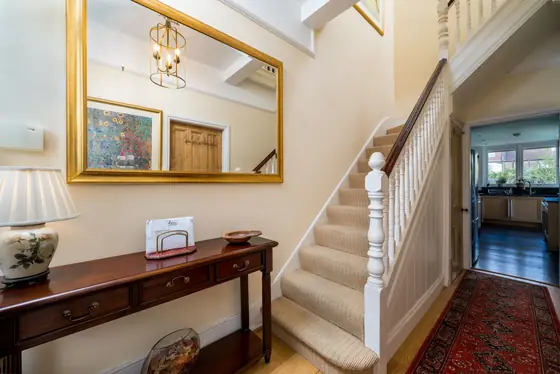
Doors, stairs and skirtings in newer homes
Nearly a third of households here have four or more bedrooms, and those houses have long runs of skirting and plenty of doors. Old gloss can be keyed and repainted in satin or eggshell, and staircases can be stained with a clear protective coat on the treads and handrail.
Godmanchester at a glance
- 19 milesby road from our Landbeach base, about 24 minutesOSRM routing
- 11%of properties were built before 1919VOA Council Tax stock
- 3%date from 1919 to 1939VOA Council Tax stock
- 79%are houses rather than flatsCensus 2021
- 124listed buildingsHistoric England
- 62%of homes are owner-occupiedCensus 2021
How we approach woodwork staining & varnishing
We test stains on a hidden area such as the back of a door before you approve the colour. Timber is sanded evenly with Mirka dust-free sanders so old varnish patches do not show through, panelled doors are worked panels first, and bare pine is sealed with Zinsser primer to stop knots bleeding. The full method, products and FAQs are on our woodwork staining & varnishing page.