
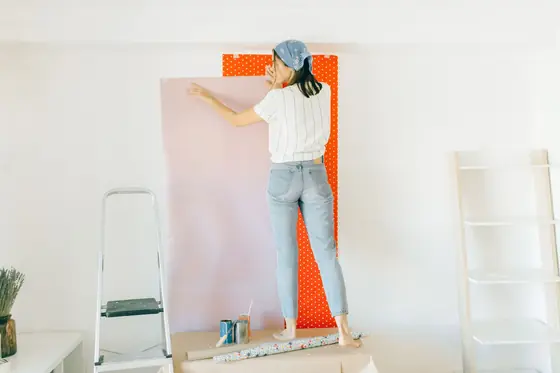
Lining older walls before papering
On an uneven wall, a lining paper goes up first, hung horizontally where the surface is poor, so the decorative paper dries onto something even and its joins stay closed. Sometimes taking old paper off brings loose plaster with it; when that happens Lewis, our plasterer, skims the patch and we pick up once it's dry.
Historic finishes in a listed house may be protected, so speak to the district council before anything original is stripped. Paper you want to keep can be protected while other work goes on, as we did with a William Morris paper in a Cambridge hall, stairs and landing.
Patterns, stairwells and feature walls
Over 40% of Bottisham households have four or more bedrooms, and larger houses often have tall stairwells where a strong pattern can work well. Simon, our wallpaper specialist, plans each drop so the repeat lines up across the landing.
On the Park Estate, a single papered wall in a living room or bedroom is an easy way to try a pattern before committing to a whole room. Our feature walls and murals page has ideas.
Bottisham at a glance
- 8 milesby road from our Landbeach base, about 12 minutesOSRM routing
- 908householdsCensus 2021
- 25listed buildingsHistoric England
- 70%of homes are owner-occupiedCensus 2021
How we approach wallpapering
We'd strip the old paper, wash the paste off and see how the plaster holds up. Any blown patches are skimmed and left to dry. Then we line, size if the maker asks for it, and hang the finish paper from a plumb line, starting at the wall you'll look at most. The full method, products and FAQs are on our wallpapering page.