
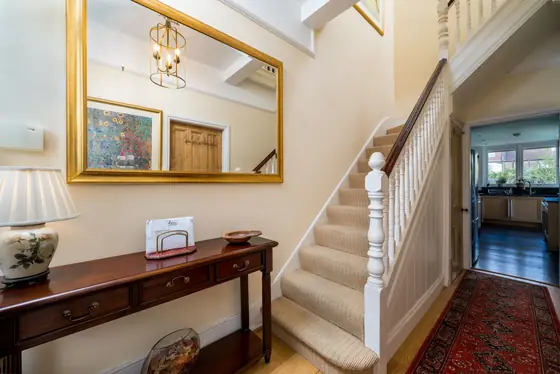
Doors, skirtings and staircases
Woodwork that has been glossed many times picks up drips, runs and chipped edges. We sand those back, fill dents and open joints, and key the old gloss so the new coat grips. Where pine is bare and knotty, a Zinsser primer stops the resin staining the new paint. Satin or eggshell suits most rooms, and gloss stands up best on kicked edges.
Doors can be painted on site by brush or spray. Our internal door painting page explains the difference.
Natural timber and listed joinery
Staining lets the grain show. The timber is sanded evenly first, because uneven sanding leaves pale patches, and the colour is tried on a hidden spot. Varnish then protects handrails and treads. Beams suit Osmo oil, which we used on the beams at the Old Telephone Exchange in nearby Fulbourn.
In Bottisham's 25 listed buildings, original joinery is part of what's protected. Ask East Cambridgeshire District Council before stripping or replacing it, and we'll prepare and repaint it in a way that keeps its detail.
Bottisham at a glance
- 8 milesby road from our Landbeach base, about 12 minutesOSRM routing
- 93%are houses rather than flatsCensus 2021
- 25listed buildingsHistoric England
- 70%of homes are owner-occupiedCensus 2021
How we approach woodwork staining & varnishing
We'd start by washing grease from door edges and handles, then sand, fill and prime. Stained work is tested first and built up in thin, even coats with a light sand between. On staircases we do alternate treads or one side at a time so you can still get up and down, and Mirka dust-free sanders limit dust. The full method, products and FAQs are on our woodwork staining & varnishing page.