Designer wallpaper hanging when every roll counts
We hang designer and heritage papers, including William Morris designs, for homes across Cambridge. This is work for our wallpaper specialist Simon and the hangers who work alongside him, because a paper that costs many times more than an ordinary one gives you very little margin. A miscut drop or a paste stain on the face can mean ordering another roll, and sometimes that roll comes from a different batch.
Reviews mention this kind of work. One customer wrote that "Simon hung designer paper from The House of Hackney, the end result was stunning", and another booked us for "Designer wallpaper with complicated pattern hung in two rooms." (both Checkatrade customers).
Before the first cut
With an expensive paper, the planning takes longer than you might expect. A good wallpaper hanger checks and decides several things before cutting anything:
- Batch and shade numbers on every roll, so all the drops come from one print run
- The type of match: straight, half-drop or a free match, which changes how drops are cut and how much waste there is
- Any print faults, unrolling a length of each roll in good light
- Whether the edges are trimmed, as some traditional and hand-printed papers still arrive with a selvedge to remove by hand
- Where the pattern's main motif will sit at the ceiling line, and where the last, least visible join will fall
Ordering the right quantity
Large repeats and half-drop matches use more paper than the area alone suggests. Graham measures during the visit and works out the rolls against the repeat, so you can order everything from one batch at once. Topping up later is the most common way designer jobs go wrong.
Paste the wall or paste the paper
The manufacturer's label decides this, and with designer papers it matters. Non-woven papers are usually hung by pasting the wall and applying the paper dry, which keeps them from stretching and makes clean butt joins easier. Traditional and many heritage papers are pasted on the table, folded and left to soak for a set time so they expand before they go up. If the soaking time varies from drop to drop, the drops expand by different amounts and the pattern won't line up at the joins.
We use the paste the manufacturer specifies, keep soaking times consistent, and keep paste off the printed face. Some hand-printed and flock papers mark if paste is wiped across them, so the sponge stays away from the face and joins are pressed with a seam roller instead.
William Morris through a hall, stairs and landing
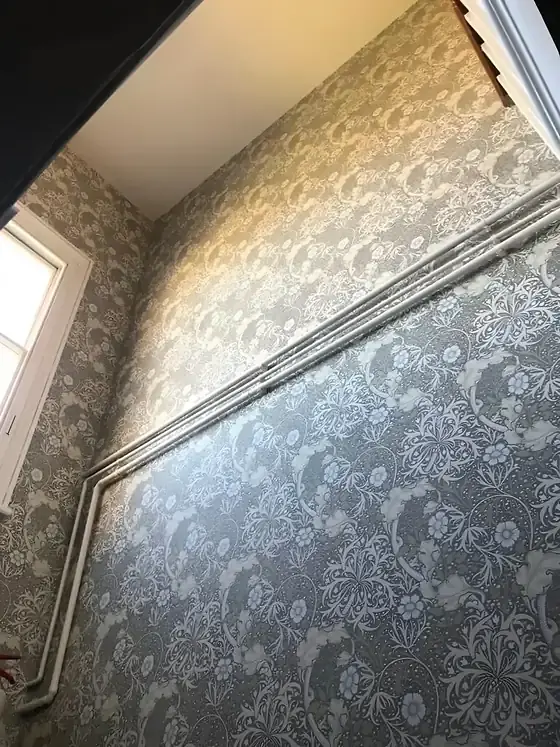
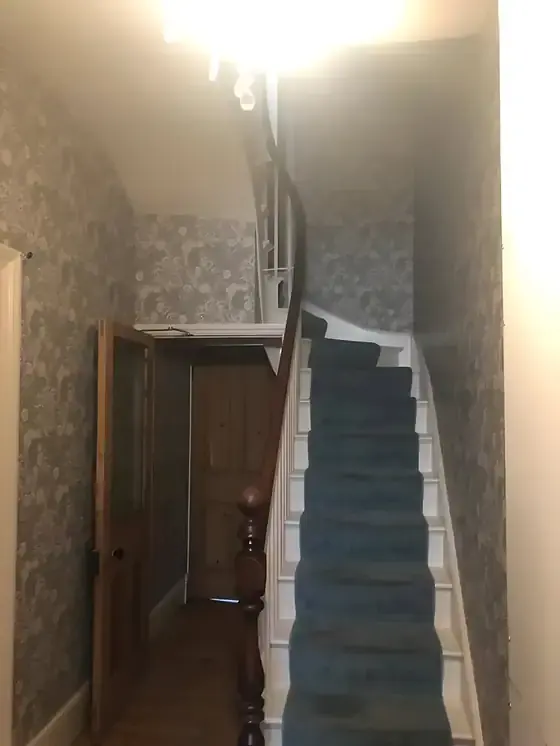
Our clearest example is a central Cambridge house where a William Morris paper runs through the hall, stairs and landing over three levels. Our master plasterer dealt with the ceilings first while the team stripped the old paper, and our wallpaper specialist then hung the new design through all three floors.
A stairwell is the hardest place to match a pattern. The drops get longer as the stairs rise, the walls are seldom plumb, and the eye follows the pattern all the way from the front door to the top landing. Each drop is hung to its own plumb line, and the horizontal position of the pattern is fixed from one reference height so the motifs line up across the hall wall, the stair wall and the landing even where ceiling heights change. Photos of the finished stairwell and landings are in the William Morris case study.
Protecting existing paper while other work goes on
Sometimes the most valuable paper in the house is the one already on the wall. On the same Cambridge job, one room had an existing William Morris paper the customer wanted to keep, so we sheeted and protected it while the ceiling above was plastered. Plastering is wet and dusty, and a single splash can mark a heritage print permanently.
The order of work is planned at the first visit for exactly this reason. Ceilings, plastering, coving and gloss on the woodwork are usually finished before a designer paper goes up, so nothing has to happen above or beside it afterwards.
Walls good enough for an expensive paper
Thin and heavily printed papers show every dent and crack beneath them. On older or patched walls we often hang a lining paper first, cross-lined so its joins run the other way to the finish paper. It gives the designer paper an even, consistent surface and helps it dry without shrinking back at the seams. Where the plaster itself is failing, our plasterers repair it before anything is hung.
What affects the cost
Designer wallpaper is slower to hang than standard paper, and the quotation reflects the work involved rather than just the area. The main factors are the size of the pattern repeat and type of match, whether the paper is pasted on the wall or soaked, untrimmed or delicate papers, stairwells and long drops, and how much stripping, repair or lining the walls need first. Graham sets each of these out in the written quotation.
Arranging a visit
Bring the paper details, or the rolls if you have them, and Graham will look at the walls, the light and the order the work needs to happen in. The quotation follows, usually by email. Belinda organises the dates and keeps you informed, and you don't pay until you're happy with the finished work. For everything else we hang, from single walls to whole houses, see our wallpapering in Cambridge page.