
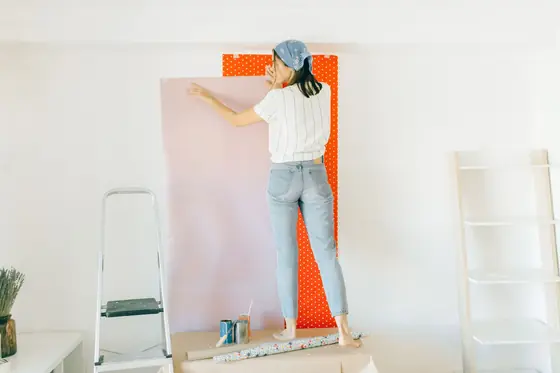
Lining paper first on old walls
In the older houses, lining paper evens out cracks and repairs and gives the finish paper a consistent surface. We strip existing paper, wash off old paste, fill and then line before the decorative paper goes up. If plaster comes away during stripping, our plasterers can make it good without stalling the job.
Simon, our wallpaper specialist, plans where the pattern falls so that joins are least visible, which matters on walls that are rarely square.
Listed buildings and long-term homes
Thirty-one buildings in the parish are listed, and if yours is one, check with West Suffolk Council before removing historic finishes. With more than half of households owning outright, many customers here are choosing paper to last, often heritage designs. Our specialist paper hangers handle designer papers where there is little room for waste.
Hundon at a glance
- 26 milesby road from our Landbeach base, about 41 minutesOSRM routing
- 23%of properties were built before 1919VOA Council Tax stock
- 6%date from 1919 to 1939VOA Council Tax stock
- 480householdsCensus 2021
- 31listed buildingsHistoric England
- 85%of homes are owner-occupiedCensus 2021
How we approach wallpapering
We check batch numbers, lay out the pattern repeat and work out where the least visible join will fall before cutting. Old walls are stripped, filled and cross-lined. Each length is hung against a plumb line, and non-woven papers are hung by pasting the wall, following the manufacturer's instructions for each paper. The full method, products and FAQs are on our wallpapering page.