
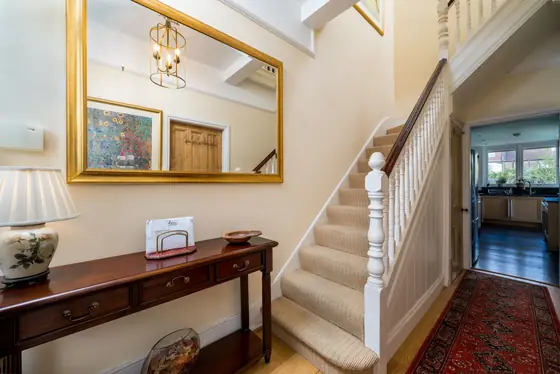
Layers of old gloss
Doors and skirtings in a 1950s or 1960s house may carry decades of gloss, with runs, chips and yellowing. We sand back with Mirka dust-free sanders, fill dents and open joints, and refinish in gloss, satin or eggshell. Painting skirtings and doors in the wall colour is a popular modern choice.
In older homes, period doors and stairs may suit stain or oil instead, letting the grain show.
Staining stairs and doors
Stairs need careful planning so you can still get up and down while the finish dries. Treads, spindles and handrails are sanded evenly so stain takes without blotching, and a clear coat goes over areas that take wear. The staircase and doors we stained in Fordham drew a lovely review. On listed buildings, check with West Suffolk Council before stripping historic finishes.
Hundon at a glance
- 26 milesby road from our Landbeach base, about 41 minutesOSRM routing
- 23%of properties were built before 1919VOA Council Tax stock
- 6%date from 1919 to 1939VOA Council Tax stock
- 98%are houses rather than flatsCensus 2021
- 31listed buildingsHistoric England
- 85%of homes are owner-occupiedCensus 2021
How we approach woodwork staining & varnishing
We test stain on a hidden area, such as the underside of a tread, before you approve the colour. Panelled doors are finished panels first, then rails and stiles. Bare pine is sealed with Zinsser primer so knots do not bleed, and gaps where skirtings meet the wall are filled for a crisp line. The full method, products and FAQs are on our woodwork staining & varnishing page.