Papering Fordham's period walls
Old plaster tends to be hard in one place and crumbly in the next. We strip the existing paper, check the surface by hand, and fill or patch before hanging lining paper, horizontally where the finish paper will run vertically. Where stripping brings plaster away, our plasterers can skim a section before we carry on.
Fordham has 29 listed buildings and a conservation area. In a listed home, ask the conservation officer at East Cambridgeshire District Council before taking out historic finishes. For heritage designs such as William Morris, see our designer wallpaper hanging page.
Feature walls and newer Fordham homes
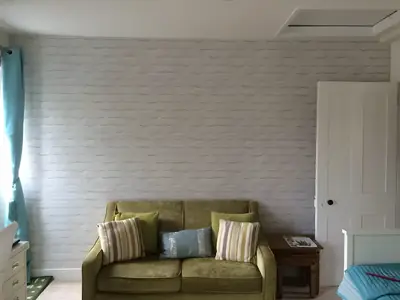
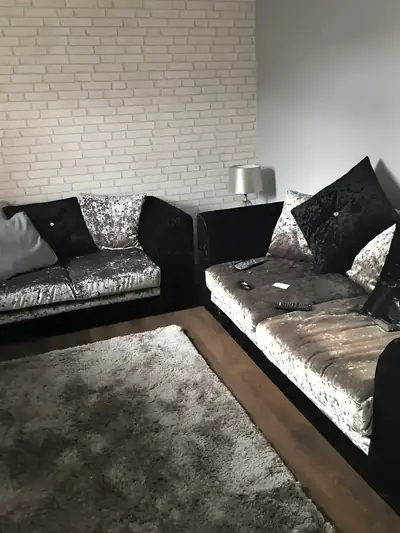
Nearly 30% of the area's homes were built in 2000 or later. Their walls are usually flat plasterboard, which suits bold papers, murals and a feature wall behind a bed or sofa. Board needs sizing or a suitable primer first, so the paper can be stripped later without tearing the surface.
Two-thirds of Fordham households own their home, and paper is a longer-term choice than paint. We hold samples against the wall to judge the scale of a pattern and decide where the repeat should fall. Simon, our wallpaper specialist, takes on the expensive rolls.
Pre-1919 walls and listed rows: papering in and around Fordham
Council Tax records can't be split out for Fordham alone, so the build dates here come from a wider statistical area in which 71.1% of households live in the parish. In that area, 18.4% of properties with a known build date went up before 1919, a bigger share than the 13.8% across East Cambridgeshire. Walls of that age are often lime or sand-and-stone plaster, repaired piecemeal, and paper shows every dip in them, so lining paper usually goes up before the finish paper.
Of the 29 entries Historic England lists in the parish, some cover more than one house. 79, 81, 83 and 85, Carter Street is a single entry for four addresses, and 16 and 18, Mill Lane is another, for two. In any listed house, ask East Cambridgeshire District Council before stripping old paper or plaster that may be original, and keep any early paper you uncover until you have an answer.
Interwar houses are scarcer than in England as a whole: 9.0% of the wider area's properties date from 1919 to 1939, against 14.8% across England, so most of the older walls here are pre-1919 ones.
Figures from Valuation Office Agency Council Tax stock by build period; Historic England's National Heritage List. Contains public sector information licensed under the Open Government Licence v3.0. © Crown Copyright 2026. Contains Ordnance Survey data © Crown copyright and database right 2026. Released under OGL.
Fordham at a glance
- 10 milesfrom our Landbeach base in a straight line, about 24 minutes by roadOSRM routing
- 18%of properties were built before 1919 (Fordham and the surrounding area)VOA Council Tax stock
- 9%date from 1919 to 1939 (Fordham and the surrounding area)VOA Council Tax stock
- 1,176householdsCensus 2021
- 29listed buildingsHistoric England
- 67%of homes are owner-occupiedCensus 2021
Sources: Census 2021 for Fordham parish (ONS); Council Tax: stock of properties, 2026, for the statistical areas covering Fordham and the surrounding area; Historic England listed buildings; road distance by OSRM.
Listed buildings and conservation areas in Fordham
- Parish Church of St PetersGrade I listed
- 15, Mill LaneGrade II listed
- 22, Mill LaneGrade II listed
- FordhamConservation area
Sources: Historic England listed buildings; Historic England conservation areas.
How we approach wallpapering
On a pre-1919 Fordham wall, the first job once the old paper is off is to run a hand over the plaster and tap for hollow spots. Soft patches are filled, anything loose is skimmed by our plasterers, and lining paper goes up and dries before the finish paper. Batch numbers are checked on every roll, the pattern is planned so the least visible join falls in a corner, and each length is hung to a plumb line rather than to its neighbour. The full method, products and FAQs are on our wallpapering page.