
Period joinery in Great Shelford
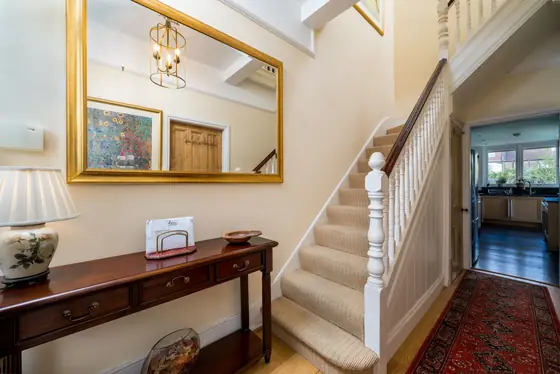
Roughly 27% of the parish's homes were built before 1939. Houses of that age tend to have deep skirtings, picture rails, panelled doors and staircases with turned spindles, often under several coats of old gloss. We fill dents, sand back runs and open joints, then either repaint in eggshell or satin, or strip and stain where the timber is worth showing.
In two bedrooms of a Victorian house in Histon, we made good, primed and repainted the picture rails, cupboard doors and skirtings, which is typical of the work older houses here need.
Beams and listed buildings
The parish has 34 listed buildings, including the Grade I Church of St Mary. In listed or timber-framed homes, we'd usually clean exposed beams and finish them with Osmo oil, as we did in Fulbourn, because it soaks in and can be topped up later. If yours is listed, ask the council before stripping original finishes.
Further afield in Fordham, Valter and Denes stained a staircase and doors that Mrs M Turner called 'the amazing transformation'. More on our reviews page.
Great Shelford at a glance
- 14 milesby road from our Landbeach base, about 21 minutesOSRM routing
- 14%of properties were built before 1919VOA Council Tax stock
- 14%date from 1919 to 1939VOA Council Tax stock
- 85%are houses rather than flatsCensus 2021
- 34listed buildingsHistoric England
- 64%of homes are owner-occupiedCensus 2021
How we approach woodwork staining & varnishing
We protect floors and walls, then clean old wax, dust and polish off the timber. Stairs and doors are sanded evenly with Mirka dust-free sanders so stain takes without patches, and the colour is tested on a hidden area first. Stain is followed by a clear protective coat on treads and handrails. Painted joinery is primed, undercoated and finished in eggshell. The full method, products and FAQs are on our woodwork staining & varnishing page.