
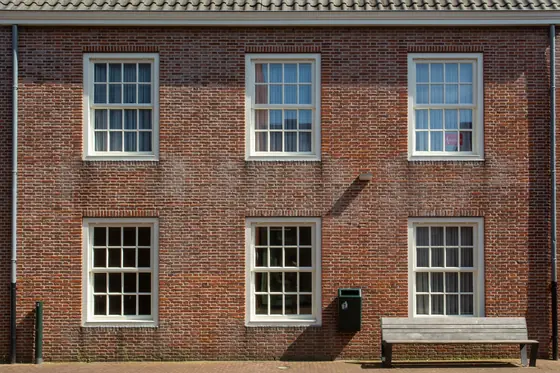
Period windows across Great Shelford
Historic England lists 34 buildings in the parish, including the Grade II* Rectory Farmhouse, and part of the village is a conservation area. That makes careful repainting of original windows more useful than replacement for many owners. If your house is listed, check with the council before changing colours or glazing.
Our work is the decorative side: scraping back failed paint, filling open joints and sills, priming bare timber and repainting. Where Graham finds rot or broken cords, our carpenter repairs them first, and the two jobs are planned together.
Old paint, sills and sliding sashes
Period windows can carry many layers of old paint, and some older paints contain lead, so we sand with Mirka dust-free sanders to keep the dust out of the room. Sills and bottom rails get the most attention because they hold standing water. We keep paint thin on the sliding faces and work each sash up and down so it still moves when we leave.
A Farrow & Ball redecoration in Cambridge shows how we primed bare pine frames with Zinsser before two coats of eggshell.
Great Shelford at a glance
- 14 milesby road from our Landbeach base, about 21 minutesOSRM routing
- 14%of properties were built before 1919VOA Council Tax stock
- 34listed buildingsHistoric England
- 1conservation arealocal council
- 14%are terracedCensus 2021
- 14%date from 1919 to 1939VOA Council Tax stock
How we approach sash window restoration
For a Great Shelford sash we inspect every window for flaking paint, open joints, cracked putty and soft timber. Loose paint is scraped to a sound edge and dust-free sanded, cracks filled, bare wood primed with Zinsser and sills sealed. After any carpentry, we undercoat and finish in eggshell or satin, easing each sash before we leave. The full method, products and FAQs are on our sash window restoration page.