
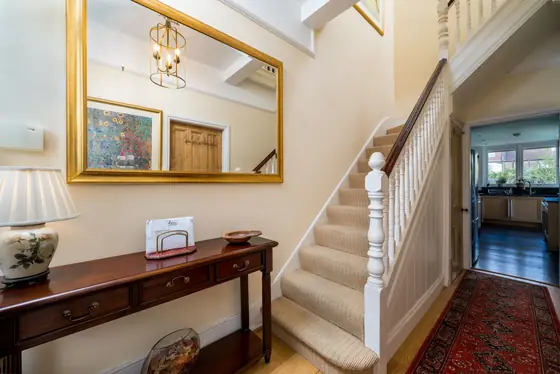
Newer homes with plain joinery
Over a quarter of Royston homes date from 2000 or later. Their joinery is usually simple in profile and quick to prepare, so the time goes into keying, filling the gaps where skirtings meet the wall and applying two proper coats of satin or eggshell.
Painting skirtings and doors in the wall colour, or a shade darker, is a popular way to make a room feel calmer. Tikkurila satin and Farrow & Ball eggshell are among the finishes we use.
Stained stairs and period timber
A stained staircase has to be sanded evenly, tread by tread, or the colour goes patchy. Mrs M Turner in Fordham had her staircase and doors stained by Valter and Denes, and her comments are on our reviews page. The stain is tested somewhere hidden first, then sealed with a clear coat where it takes wear.
In Royston's older and listed buildings, original joinery is worth repairing and refinishing, so check with North Hertfordshire District Council before stripping it. For exposed beams, Osmo oil gives a natural matt finish.
Royston at a glance
- 22 milesby road from our Landbeach base, about 32 minutesOSRM routing
- 10%of properties were built before 1919VOA Council Tax stock
- 3%date from 1919 to 1939VOA Council Tax stock
- 80%are houses rather than flatsCensus 2021
- 116listed buildingsHistoric England
- 71%of homes are owner-occupiedCensus 2021
How we approach woodwork staining & varnishing
Doors are cleaned around handles and keyed, gaps at skirtings filled and old drips sanded out with Mirka dust-free sanders. Bare pine gets a Zinsser primer so knots don't bleed. For stained stairs we test the colour on a hidden tread, apply it evenly and seal treads and handrails with a clear protective coat. The full method, products and FAQs are on our woodwork staining & varnishing page.