
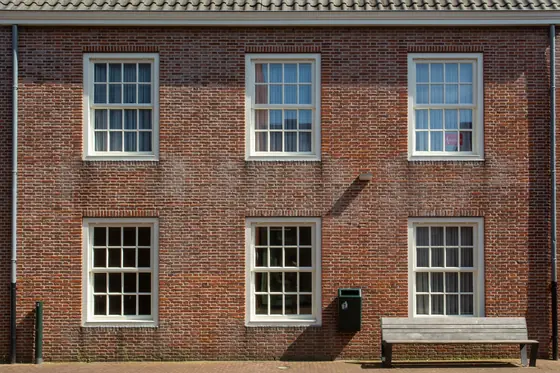
A small but important share of homes
Pre-1919 homes are about 10% of the town, so sash windows are much less common here than uPVC. Where they survive, they're usually worth keeping. Our part is the decorative work: scraping, dust-free sanding, filling open joints, priming bare wood and painting. Broken cords and rotten timber go to our carpenter first.
The windows facing the weather usually need far more work than sheltered ones, so Graham lists each window in the quotation.
Listed buildings and window colour
If your home is listed or in the Royston conservation area, check with North Hertfordshire District Council before changing the outside colour of the windows. White and soft off-whites are the usual choice outside; inside, a coloured window can work well, such as the Fired Earth Turkish Blue we used in a Cambridge bedroom.
Doors, shutters and panelling in the same room can be decorated alongside under our woodwork service.
Royston at a glance
- 22 milesby road from our Landbeach base, about 32 minutesOSRM routing
- 10%of properties were built before 1919VOA Council Tax stock
- 116listed buildingsHistoric England
- 1conservation arealocal council
- 22%are terracedCensus 2021
- 3%date from 1919 to 1939VOA Council Tax stock
How we approach sash window restoration
Loose paint is scraped back to a firm edge and sanded with Mirka dust-free sanders, as older layers can contain lead. We fill cracks, prime bare timber and pay particular attention to sills and bottom rails. A neat paint line onto the glass seals the putty. Sashes are moved during the job so nothing sets shut. The full method, products and FAQs are on our sash window restoration page.