
Elevations that face the weather
Around 2,028 households live in a detached house and 2,270 in a semi. On those properties, the side and rear walls often go longest without attention, and that's where cracked render, flaking masonry paint and soft fascia boards most often show up. Everything Graham finds goes into the written quotation before work starts.
Shaded walls collect algae and mould. We jet wash those with an anti-fungal wash, let them dry thoroughly and only then paint with a breathable masonry product. Our exterior case study from Cambridge shows the method on a badly affected house.
The Royston conservation area and brick
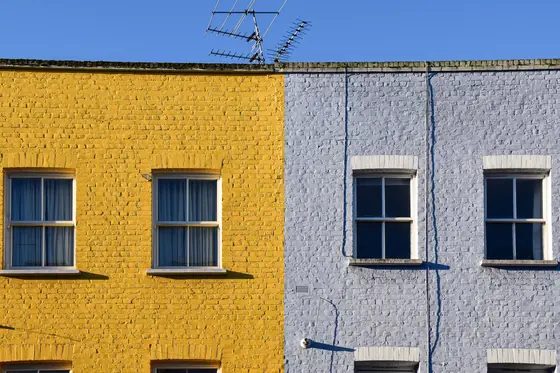
Part of the town lies in the Royston conservation area, and 116 buildings are listed. The lodgings James VI and I built here were described in 1652 as all of brick. Painting historic brick is a decision to take slowly, so if your house is listed or in the conservation area, talk to North Hertfordshire District Council before painting bare brick or making a big colour change.
On newer houses, test patches on a discreet wall help you choose a colour you'll be happy seeing every day.
Royston at a glance
- 22 milesby road from our Landbeach base, about 32 minutesOSRM routing
- 80%are houses rather than flatsCensus 2021
- 27%of homes are detachedCensus 2021
- 10%of properties were built before 1919VOA Council Tax stock
- 1conservation arealocal council
- 13%were built 1945 to 1964VOA Council Tax stock
How we approach exterior painting
On a 1970s detached house we'd survey all four sides, jet wash with anti-fungal treatment, scrape and sand loose paint, and repair render and masonry cracks. Bare timber at the roofline is primed and undercoated, then gutters and fascias finished from the same access. Masonry paint goes on in dry, mild conditions only. The full method, products and FAQs are on our exterior painting page.