
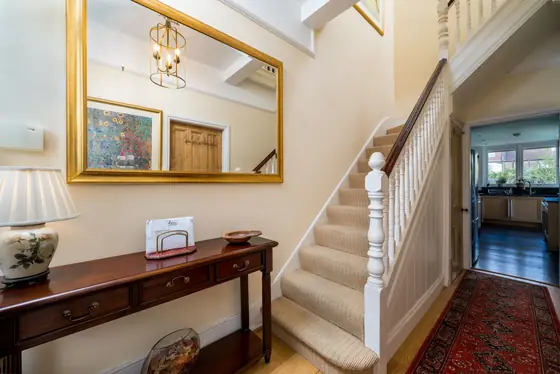
Period joinery in older Biggleswade homes
Victorian and Edwardian joinery has often been glossed many times, with drips, runs and filled dents building up over the decades. We sand back to a smooth base, fill where needed and prime bare patches before new coats. In two bedrooms of a Victorian house in Histon, picture rails, skirtings, cupboard doors and frames were all made good, primed, undercoated and finished in white.
In a listed building, and Biggleswade has 53, original joinery is part of what's protected, so check with Central Bedfordshire Council before stripping or changing it.
Staining staircases and doors
A stained staircase is what you see first from the front door. Treads, handrails and spindles are sanded so the stain takes evenly, and a clear protective coat goes over the treads and handrail. In Fordham, Valter and Denes stained a staircase and doors that the customer called an amazing transformation.
On a panelled door we stain the panels before the rails and stiles, which stops darker bands forming where wet edges overlap. Beams and oak can be finished in Osmo oil instead. See our staining and varnishing page for gloss, satin and eggshell options.
Biggleswade at a glance
- 27 milesby road from our Landbeach base, about 44 minutesOSRM routing
- 8%of properties were built before 1919VOA Council Tax stock
- 6%date from 1919 to 1939VOA Council Tax stock
- 86%are houses rather than flatsCensus 2021
- 53listed buildingsHistoric England
- 68%of homes are owner-occupiedCensus 2021
How we approach woodwork staining & varnishing
We test stain or paint on a hidden area first, since old pine, oak and newer softwood take colour differently. Old gloss is keyed or stripped, dents filled and bare timber primed with Zinsser to stop knots bleeding. Stairs are done in sections so there's always a way up, and handrails and treads get a hard-wearing clear coat. The full method, products and FAQs are on our woodwork staining & varnishing page.