Shop and restaurant painting in Cambridge
We paint and decorate shops, cafes and restaurants in Cambridge. That covers shopfronts and signboards, sales floors, dining rooms, bars, customer toilets and back-of-house areas. Graham visits to see the premises during a quiet spell, asks how the business runs day to day, and puts the work into a written quotation.
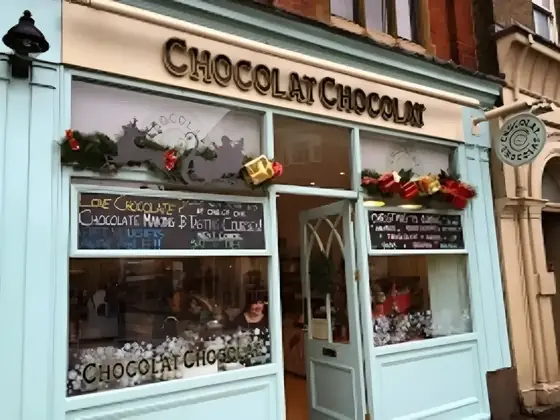
The pale blue shopfront of Chocolat Chocolat appears in our gallery. Customers judge a shop or restaurant on how it looks before they walk in, and on how clean it feels once they do, so both get the same care.
Shopfronts and exterior timber
A painted timber shopfront faces weather, traffic grime and the occasional knock from a delivery. We wash it down, scrape and sand back any loose or flaking paint, fill splits, and prime bare wood before undercoat and two top coats. Most exterior paints need dry weather and temperatures above about 5°C to cure properly, so shopfront work suits the drier months.
Signwriting and lettering are a separate trade, so we paint around existing lettering or leave a clean ground for your signwriter. In Cambridge, many shops sit in conservation areas or listed buildings. If you're changing the colour of a listed shopfront, check with Greater Cambridge Shared Planning, which handles planning for Cambridge City Council, before work is booked. For the timber and glazing detail, see our exterior window painting page.
Cafe, restaurant and pub interiors
Dining rooms and front of house
Chairs scuff walls at back height, and tables get pushed against them. A washable, durable emulsion copes with that far better than a decorative flat matt. Deep, warm colours are popular in restaurants and bars; they need good preparation and often an extra coat to cover evenly, and we paint testers under your own lighting, in several places, before you commit.
Kitchens and food areas
Commercial kitchens leave grease and condensation on every surface. We degrease first, as paint won't hold on a greasy wall, then use a wipeable finish. Food hygiene rules expect walls in food rooms to be easy to clean, and paint needs to cure fully before food preparation restarts, so we plan kitchen work around a closure.
Pubs and older buildings
Older pub ceilings often still carry nicotine from before the 2007 smoking ban in England. They need washing and sealing with a Zinsser stain block before any emulsion, as our stain-blocking page explains. Exposed beams can be cleaned and oiled with Osmo, as we did on beams in Fulbourn.
Sales floors, display walls and customer toilets
Retail walls collect holes every time the layout changes: shelving brackets, slatwall, display hooks and poster fixings. Before repainting we fill and sand each one flush and spot-prime it, so the old positions don't show as shiny patches under bright shop lights. Long, plain walls lit from above show every ridge and roller mark, so the filling and sanding take as long as the painting.
Customer toilets get cleaned harder than any other room on the premises. They need a moisture-resistant, wipeable finish on the walls, well-sealed woodwork around basins and boxing, and any mould treated before it is painted over.
Hotel and guest rooms
Hotels and guest houses usually need rooms back in service one at a time. That is the same rhythm we worked to at Westminster College, moving decorators in and out of 38 rooms to the college's schedule. Feature wallpaper in bedrooms or reception areas is hung by our wallpaper specialists, and hard-wearing finishes on doors and frames hold up to luggage and housekeeping trolleys.
Keeping the doors open while we work
We'll talk through timings that keep disruption down, such as a quieter day of the week, a planned closure, or working one section of the sales floor at a time behind a cordon. Wet paint is clearly signed, fire exits and walkways stay clear, and we sand with Mirka dust-free sanders that extract at the source, which matters near food and stock.
Low-odour water-based paints are the default in customer areas. Where a primer or woodwork paint has a stronger smell, we plan it for an area that can be closed off and ventilated.
What affects the price
Every cost appears in the written quotation. The main factors are:
- Size of the premises and how much of it is included
- Condition of the shopfront timber or interior walls
- Degreasing kitchens and sealing nicotine or water marks
- Phasing the work around trading or a closure
- Height and access, including stairwells and high ceilings
- Colours, finishes and any wallpaper
Arranging the work
Get in touch with your premises address and any dates that matter, such as a reopening or the run-up to Christmas. Graham visits, then sends a written quotation, usually by email. Belinda organises the job and keeps you informed, and you don't pay until you're happy with the finish. Offices and other workplaces are on our office painting page, and the full range is on commercial painting.