If your floorboards are sound and you like the look of wood, sanding and oiling usually suits them better, because worn patches can be re-oiled without starting again. Painting floorboards makes more sense when the boards are patchy, mismatched or partly replaced, or when you want colour. Either way the floor needs sanding first, and once boards are painted, going back to bare wood means sanding all the paint off.
This guide compares the two, explains where staining fits in, what to do about floorboard gaps, and the checks worth making in an older house before any sander comes out.
Painting floorboards vs sanding and oiling at a glance
| Painted boards | Sanded and oiled boards | |
|---|---|---|
| Look | Solid colour, hides the grain | Shows the grain and natural colour |
| Hides patched or mismatched boards | Yes | No; new or replacement boards will look different |
| Preparation | Sanding to key the surface, filling, knots sealed | Full sanding back to clean timber |
| Example product time | Ronseal Diamond Hard: walk on after 4 to 6 hours, fully hard after 72 hours | Osmo Polyx-Oil clear: about 8 to 10 hours between coats, fully cured in 2 to 3 weeks |
| Wear | Scuffs and chips show, especially in pale colours | Wear shows as dulling; re-oil the area |
| Changing your mind | Paint must be fully sanded off before oiling | Oil has to be sanded off before most floor paints will grip; check the paint maker's guidance |
The product times come from Ronseal's floor paint page and Osmo's Polyx-Oil instructions. Other products differ, so always follow the tin.
When painting floorboards is the better choice
Paint is a cover-up, and that is its strength. Wooden Flooring Experts describes painting as ideal for concealing flaws and blending different wood species. That makes it a good answer when:
- several boards have been replaced with new timber that will never match
- the boards are stained, scorched or heavily marked
- you want a colour, such as a pale floor to brighten a dark room or a painted border
- it is a low-traffic room, such as a spare bedroom, where wear matters less
Painting is not a shortcut past sanding. Ronseal advises using a floor sander with 120 grit paper before its floor paint, filling holes and sealing knots. B&Q suggests a medium to light sandpaper depending on the boards, and says to check the tin for whether a primer is needed.
Be realistic about wear. B&Q notes that white and light grey floors make a room brighter but show scuffs and dirt. Wooden Flooring Experts lists visible scuffs and chips, repairs that are hard to blend in, and difficult removal as the main drawbacks. Ronseal says a damaged patch of its floor paint can be sanded and given a thin coat, so spot repairs are possible, but hallways and doorways will need attention more often than a bedroom.
When sanding and oiling makes more sense
In general trade experience, original pine boards in Victorian and Edwardian houses are often in better condition than they look under old varnish and carpet. Sanding takes them back to clean timber, and an oil finish brings out the grain.
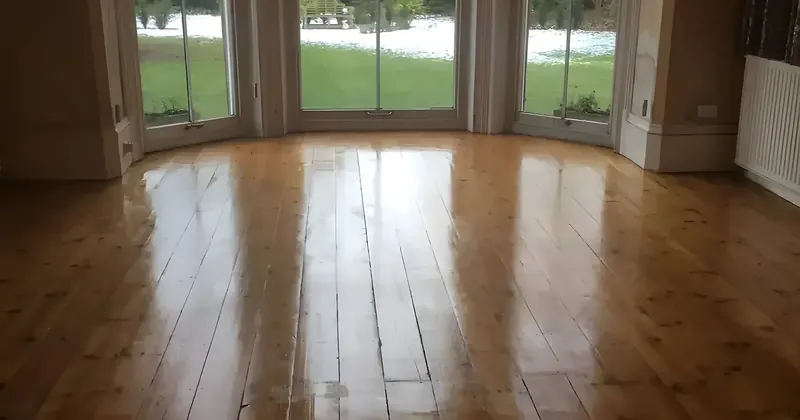
Our Haddenham floor restoration shows the process. Chris, our wooden floor specialist, sanded the dining and living room floors right back with a belt sander and an edging sander, repaired minor imperfections and filled small gaps with a mix of sawdust and Induro Morrells Mix & Fill. After smoothing again with a Mirka dust-free sander, he finished the floors in Osmo Polyx tint oil in Gold, which contains flecks of 24-carat gold.
The practical advantage of a hardwax oil is maintenance. Osmo says that when signs of wear appear you can simply re-apply one coat to the cleaned surface. MyJobQuote's floor guide makes a similar point, noting that damage to an oiled floor can be repaired with maintenance oil rather than sanding the whole floor, though it also says oiled floors need re-oiling every 18 months or so.
There are limits. Osmo's instructions say the wood must have a moisture content of no more than 18%, and that old paints and lacquers must be completely removed before oiling. Flooring fitters generally advise that engineered boards, with their thin wear layer, may not take a full sand, and that laminate cannot be sanded at all. Our floor sanding service page explains how Chris checks what you have before quoting.
What about staining floorboards?
Staining sits between the two. It changes the colour of the wood but keeps the grain visible. Wooden Flooring Experts says a stain needs the floor sanded to bare, raw wood so it absorbs evenly, followed by two to three coats of a clear protective finish, and that a stain can make wood darker but not lighter.
A tinted oil is another route. Osmo says that on floors you should apply a maximum of one coat of a coloured Polyx-Oil, then a clear top coat. Always try a test patch on a spare board or in a corner, because the same stain looks different on old pine and new timber.
If you also have stairs or other natural woodwork, our staining and varnishing service covers those.
Floorboard gaps: fill them, leave them or draught-proof them?
You do not have to fill floorboard gaps before painting. B&Q says it is not necessary, although filling changes the look and stops dust collecting.
There are three common approaches, and they suit different gaps:
- Sawdust and filler for small gaps. This is what Chris did in Haddenham, mixing the floor's own sawdust with Mix & Fill so the colour stays close to the boards. MyJobQuote's guide prices sawdust and resin filling for gaps up to 3mm.
- Timber slivers for wider gaps. MyJobQuote says wider gaps are filled using wooden slivers.
- Flexible filler for draughts. The Energy Saving Trust advises using a filler that tolerates movement, such as a silicone-based or flexible filler, because floorboards and skirtings expand, contract and move with everyday use.
Do not seal everything. The Energy Saving Trust warns against blocking underfloor grilles or airbricks, which keep wooden joists and floors dry. In older houses with suspended timber floors, that ventilation matters.
Checks for older floors before you start
Lifting a carpet in an older house can reveal more than boards.
- Old floor tiles or adhesive. HSE says asbestos was added to PVC and thermoplastic floor tiles, some stuck down with asbestos-containing bitumen adhesive, and that old tiles can be hidden under carpets. It lists grinding off flooring materials as higher-risk work for a licensed contractor. If you find old tiles or black adhesive, get them tested before any sanding.
- Old paint on the boards or skirtings. UK government guidance says lead paint was common before the 1970s and that exposure is likely when it is removed or sanded. HSE lists dry sanding old paint among the riskiest jobs. A painted border or old skirting paint should be checked before a sander goes near it.
- Pipes and cables. B&Q advises checking for pipework and cables under loose boards before nailing or screwing them down.
- Loose nails. Floor sanders generally find that nails standing proud tear sanding paper and mark the timber, so they need punching down first.
What does each option cost?
We do not publish our own prices. National guides, checked on 23 October 2026, give these figures for professional work:
- MyBuilder (updated 21 October 2026): sanding and staining £25 to £40 per m², or about £500 to £1,200 for a 15 to 20m² room. Within that, it prices a hardwax oil finish at £10 to £15 per m², gap filling at £3 to £8 per m², and a typical minimum call-out of £250 to £350.
- MyJobQuote (no date shown): sanding only from around £12 per m², and sanding plus two coats of hardwax oil from around £19 per m².
We did not find a published national guide for having floorboards painted, so we have not quoted a figure. The cost depends on how much sanding, filling and priming the boards need and how many coats the paint requires; Ronseal's floor paint, for example, recommends three. A written quotation that separates preparation from finishing is the clearest way to compare the options.
How we'd approach it, and when DIY is fine
Painting the boards in a spare room is a reasonable DIY job if you can hire a sander and are happy to take the time over preparation. Read the tin, keep the room above the minimum temperature (Ronseal says 10°C), and paint towards the door.
Call a specialist if the floor has old paint, tiles or adhesive you are unsure about, if the boards are badly worn or loose, if you want original boards restored, or if the floor runs through several rooms. Chris works alongside our decorators, so floors and walls can be planned in the right order, with sanding done before the final coats on skirtings. Our guide to preparing for a decorator explains how to get the room ready.
Haddenham is near Ely; see our Ely and surrounding villages page. We cover Cambridge and the towns and villages around it. If you are weighing up paint against sanding, our floor sanding and restoration service starts with a free visit and written quotation. Get in touch to arrange it.
Questions people also ask
Can I paint floorboards without sanding?
Floor paint makers still recommend sanding. Ronseal advises a floor sander with 120 grit paper before its floor paint, to give the paint a surface to grip. Clean, sound boards may only need a light sand.
How long before I can walk on painted floorboards?
It depends on the product. Ronseal says its Diamond Hard Floor Paint can be walked on after four to six hours and is fully hard after 72 hours.
Can I oil boards that have been painted before?
Only once the paint is fully sanded off. Osmo says old paints and lacquers must be completely removed before applying Polyx-Oil.
Should I fill the gaps between floorboards?
It is optional. Small gaps can be filled with sawdust and filler, wider ones with timber slivers, and flexible filler suits draughty gaps. Never block airbricks or underfloor vents.
How often does an oiled floor need re-oiling?
Osmo says to re-apply one coat when signs of wear appear. MyJobQuote's guide suggests every 18 months or so, but busy hallways may need it sooner than bedrooms.
Talk to Graham about your floor sanding
Graham visits free of charge, looks at the job with you and sends a detailed written quotation. You don't pay until you're happy with the finished work. We only take on work within 15 miles of Landbeach, which takes in Cambridge and the towns and villages around it: find your area.
Sources
- Diamond Hard Floor Paint, Ronseal (checked 23 October 2026)
- How to paint floorboards, B&Q (checked 23 October 2026)
- Polyx-Oil Original, Osmo UK (checked 23 October 2026)
- Should you stain or paint your floorboards?, Wooden Flooring Experts (checked 23 October 2026)
- Sanding and Staining Wooden Floors Cost in the UK, MyBuilder (checked 23 October 2026)
- Floor Sanding & Finishing, MyJobQuote (checked 23 October 2026)
- Draught proofing, Energy Saving Trust (checked 23 October 2026)
- Locations of asbestos and taking the right action, Health and Safety Executive (checked 23 October 2026)
- Frequently asked questions on lead, Health and Safety Executive (checked 23 October 2026)
- Lead: information for the public, UK Health Security Agency (GOV.UK) (checked 23 October 2026)
Written by Graham Halpenny Decorators. Third-party prices, product data and regulations are credited to their source with the date we checked them; they are not our prices. Spotted something out of date? Let us know.